mirror of
https://github.com/ByteByteGoHq/system-design-101.git
synced 2026-04-03 01:17:23 -04:00
 ee4b7305a2
This PR adds all the guides from [Visual
Guides](https://bytebytego.com/guides/) section on bytebytego to the
repository with proper links.

- [x] Markdown files for guides and categories are placed inside
`data/guides` and `data/categories`
- [x] Guide links in readme are auto-generated using
`scripts/readme.ts`. Everytime you run the script `npm run
update-readme`, it reads the categories and guides from the above
mentioned folders, generate production links for guides and categories
and populate the table of content in the readme. This ensures that any
future guides and categories will automatically get added to the readme.
- [x] Sorting inside the readme matches the actual category and guides
sorting on production
1.0 KiB
1.0 KiB
title, description, image, createdAt, draft, categories, tags
| title | description | image | createdAt | draft | categories | tags | |||
|---|---|---|---|---|---|---|---|---|---|
| OAuth 2.0 Flows | Explore OAuth 2.0 flows: Authorization Code, Client Credentials, and more. | https://assets.bytebytego.com/diagrams/0112-oauth-flows.png | 2024-03-10 | false |
|
|
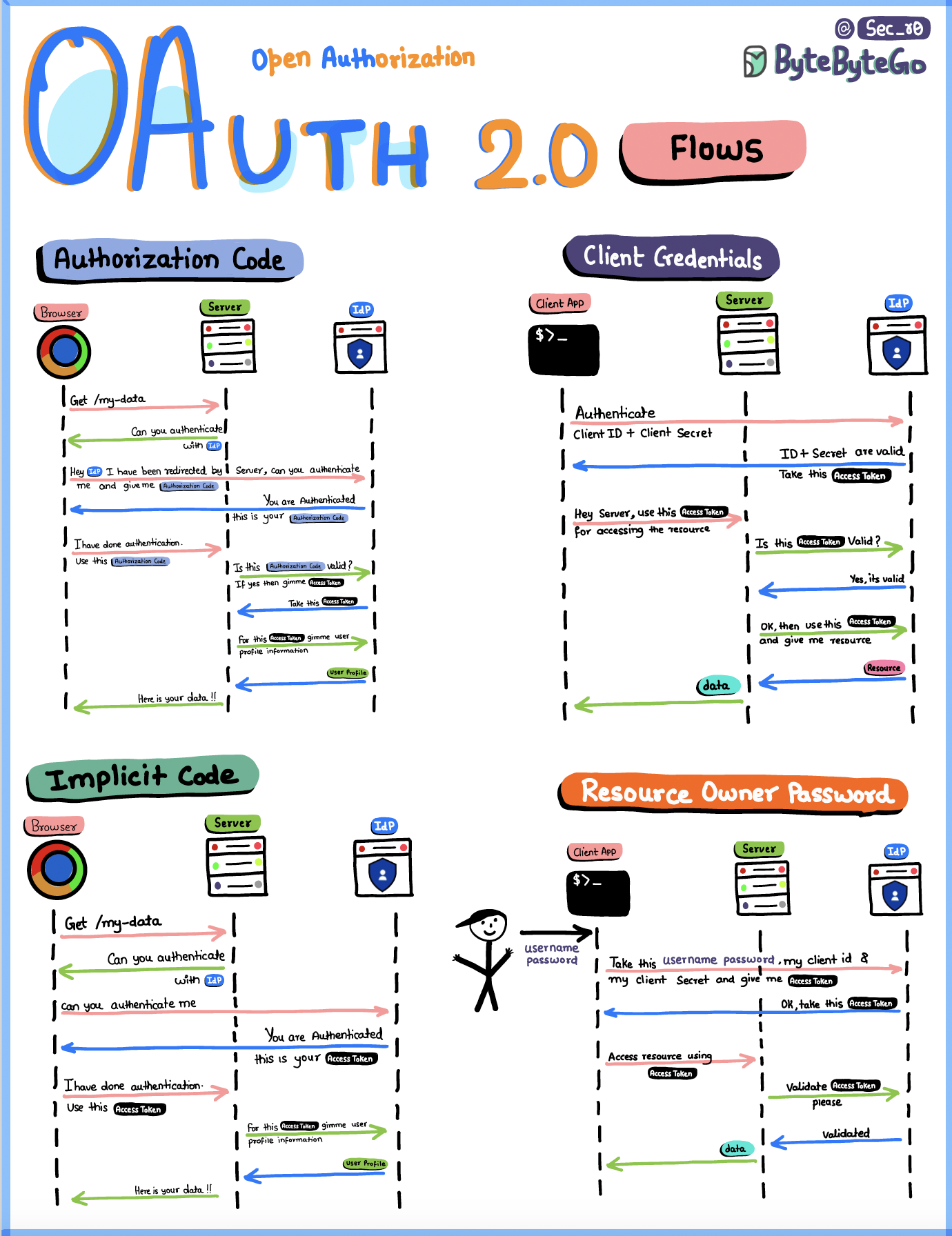
Authorization Code Flow
The most common OAuth flow. After user authentication, the client receives an authorization code and exchanges it for an access token and refresh token.
Client Credentials Flow
Designed for single-page applications. The access token is returned directly to the client without an intermediate authorization code.
Implicit Code Flow
Designed for single-page applications. The access token is returned directly to the client without an intermediate authorization code.
Resource Owner Password Grant Flow
Allows users to provide their username and password directly to the client, which then exchanges them for an access token.