 ee4b7305a2
This PR adds all the guides from [Visual
Guides](https://bytebytego.com/guides/) section on bytebytego to the
repository with proper links.

- [x] Markdown files for guides and categories are placed inside
`data/guides` and `data/categories`
- [x] Guide links in readme are auto-generated using
`scripts/readme.ts`. Everytime you run the script `npm run
update-readme`, it reads the categories and guides from the above
mentioned folders, generate production links for guides and categories
and populate the table of content in the readme. This ensures that any
future guides and categories will automatically get added to the readme.
- [x] Sorting inside the readme matches the actual category and guides
sorting on production
1.2 KiB
title, description, image, createdAt, draft, categories, tags
| title | description | image | createdAt | draft | categories | tags | ||||
|---|---|---|---|---|---|---|---|---|---|---|
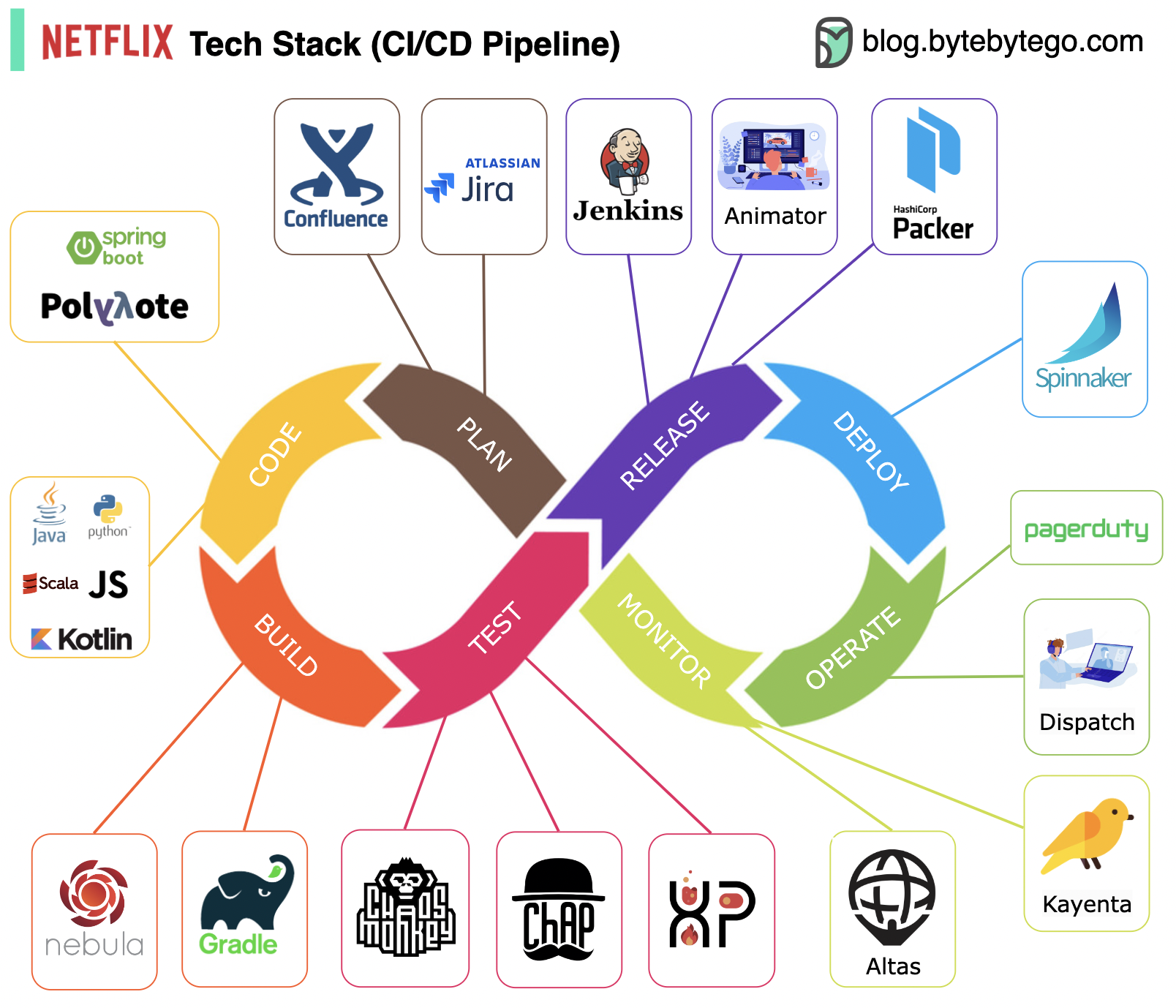
| Netflix Tech Stack - CI/CD Pipeline | Netflix's CI/CD pipeline: from planning to incident reporting. | https://assets.bytebytego.com/diagrams/0287-netflix-ci-cd.png | 2024-03-02 | false |
|
|
-
Planning: Netflix Engineering uses JIRA for planning and Confluence for documentation.
-
Coding: Java is the primary programming language for the backend service, while other languages are used for different use cases.
-
Build: Gradle is mainly used for building, and Gradle plugins are built to support various use cases.
-
Packaging: Package and dependencies are packed into an Amazon Machine Image (AMI) for release.
-
Testing: Testing emphasizes the production culture's focus on building chaos tools.
-
Deployment: Netflix uses its self-built Spinnaker for canary rollout deployment.
-
Monitoring: The monitoring metrics are centralized in Atlas, and Kayenta is used to detect anomalies.
-
Incident report: Incidents are dispatched according to priority, and PagerDuty is used for incident handling.