mirror of
https://github.com/ByteByteGoHq/system-design-101.git
synced 2026-04-03 01:17:23 -04:00
 ee4b7305a2
This PR adds all the guides from [Visual
Guides](https://bytebytego.com/guides/) section on bytebytego to the
repository with proper links.

- [x] Markdown files for guides and categories are placed inside
`data/guides` and `data/categories`
- [x] Guide links in readme are auto-generated using
`scripts/readme.ts`. Everytime you run the script `npm run
update-readme`, it reads the categories and guides from the above
mentioned folders, generate production links for guides and categories
and populate the table of content in the readme. This ensures that any
future guides and categories will automatically get added to the readme.
- [x] Sorting inside the readme matches the actual category and guides
sorting on production
919 B
919 B
title, description, image, createdAt, draft, categories, tags
| title | description | image | createdAt | draft | categories | tags | |||
|---|---|---|---|---|---|---|---|---|---|
| Memcached vs Redis | Explore the key differences between Memcached and Redis for caching. | https://assets.bytebytego.com/diagrams/0267-memcached-redis.jpg | 2024-02-25 | false |
|
|
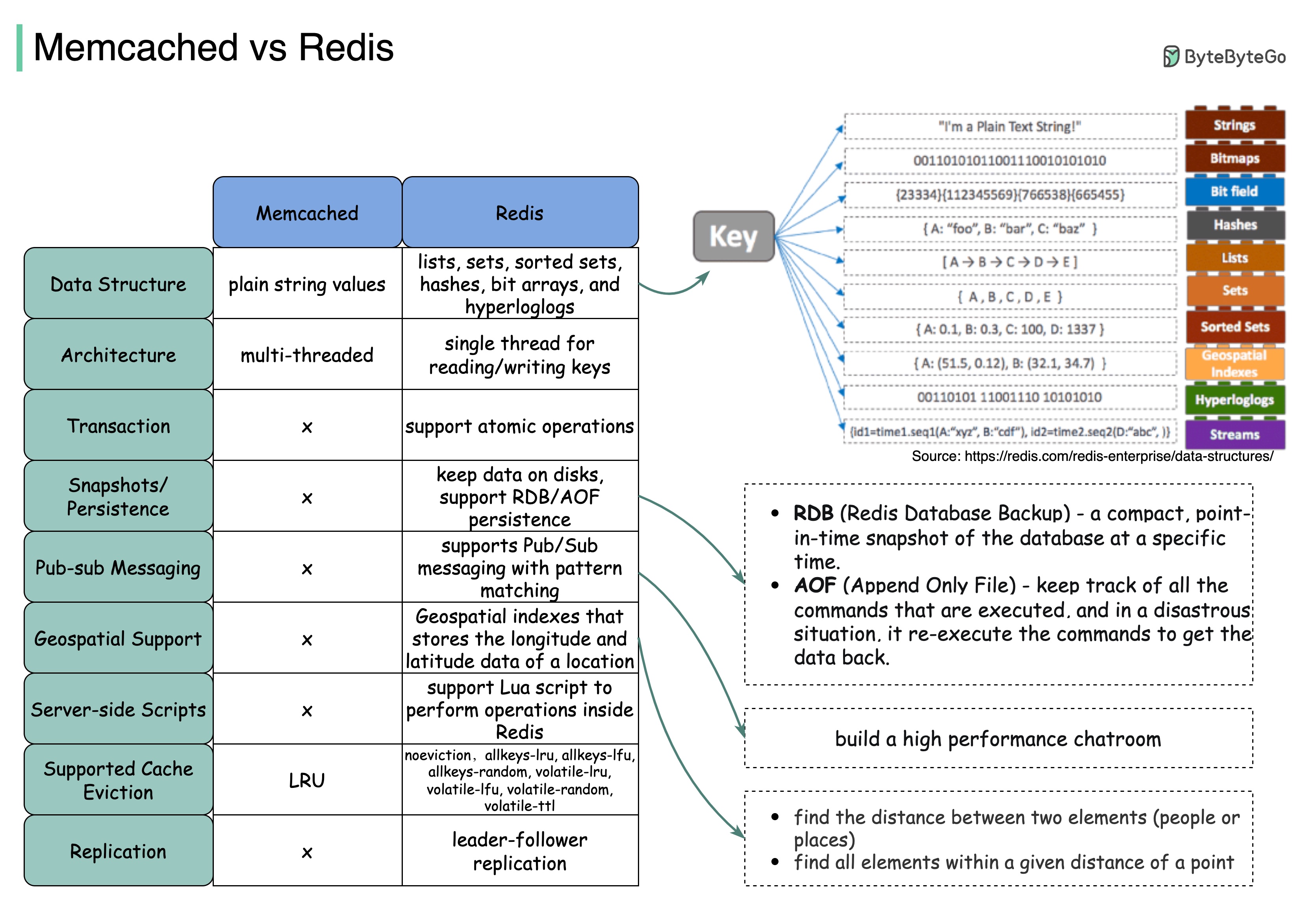
Popular interview question - what are the differences between Redis and Memcached?
The diagram above illustrates the key differences. The advantages of data structures make Redis a good choice for:
-
Recording the number of clicks and comments for each post (hash)
-
Sorting the commented user list and deduping the users (zset)
-
Caching user behavior history and filtering malicious behaviors (zset, hash)
-
Storing boolean information of extremely large data into small space. For example, login status, membership status. (bitmap)