mirror of
https://github.com/ByteByteGoHq/system-design-101.git
synced 2026-04-10 03:57:25 -04:00
 ee4b7305a2
This PR adds all the guides from [Visual
Guides](https://bytebytego.com/guides/) section on bytebytego to the
repository with proper links.

- [x] Markdown files for guides and categories are placed inside
`data/guides` and `data/categories`
- [x] Guide links in readme are auto-generated using
`scripts/readme.ts`. Everytime you run the script `npm run
update-readme`, it reads the categories and guides from the above
mentioned folders, generate production links for guides and categories
and populate the table of content in the readme. This ensures that any
future guides and categories will automatically get added to the readme.
- [x] Sorting inside the readme matches the actual category and guides
sorting on production
1.5 KiB
1.5 KiB
title, description, image, createdAt, draft, categories, tags
| title | description | image | createdAt | draft | categories | tags | |||
|---|---|---|---|---|---|---|---|---|---|
| McDonald’s Event-Driven Architecture | Explore McDonald’s event-driven architecture for scalability and efficiency. | https://assets.bytebytego.com/diagrams/0266-mcdonald-s-event-driven-architecture.png | 2024-02-18 | false |
|
|
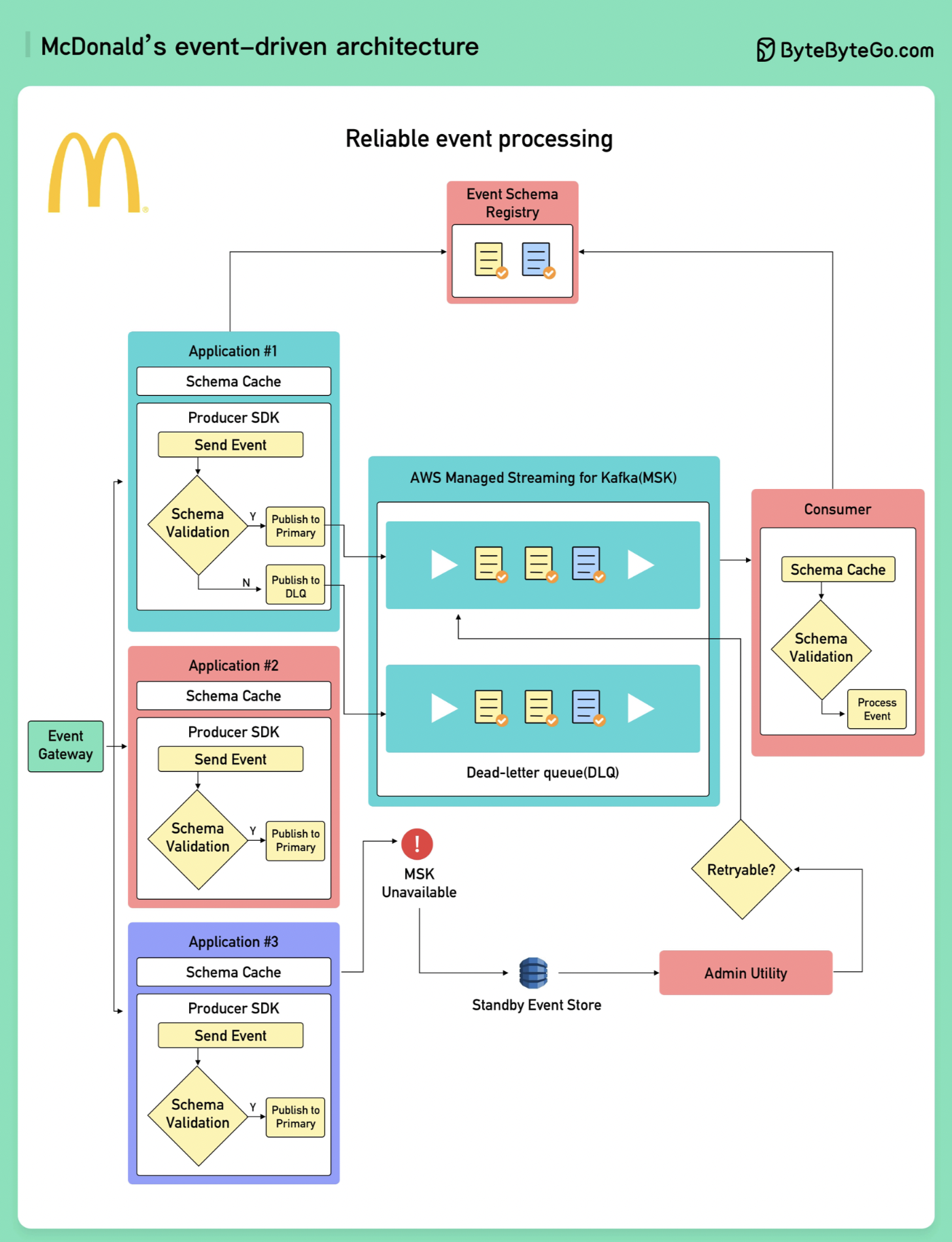
Think you know everything about McDonald's? What about its event-driven architecture?
McDonald's standardizes events using the following components:
- Event Registry: An event registry to define a standardized schema.
- Custom SDKs: Custom software development kits (SDKs) to process events and handle errors.
- Event Gateway: An event gateway that performs identity authentication and authorization.
- Utilities and Tools: Utilities and tools to fix events, keep the cluster healthy, and perform administrative tasks.
To scale event processing, McDonald uses a regional architecture that provides global availability based on AWS. Within a region, producers shard events by domains, and each domain is processed by an MSK cluster. The cluster auto-scales based on MSK metrics (e.g., CPU usage), and the auto-scale workflow is based on step-functions and re-assignment tasks.
Reference: Behind the scenes: McDonald’s event-driven architecture