mirror of
https://github.com/ByteByteGoHq/system-design-101.git
synced 2026-04-04 17:37:23 -04:00
 ee4b7305a2
This PR adds all the guides from [Visual
Guides](https://bytebytego.com/guides/) section on bytebytego to the
repository with proper links.

- [x] Markdown files for guides and categories are placed inside
`data/guides` and `data/categories`
- [x] Guide links in readme are auto-generated using
`scripts/readme.ts`. Everytime you run the script `npm run
update-readme`, it reads the categories and guides from the above
mentioned folders, generate production links for guides and categories
and populate the table of content in the readme. This ensures that any
future guides and categories will automatically get added to the readme.
- [x] Sorting inside the readme matches the actual category and guides
sorting on production
1.1 KiB
1.1 KiB
title, description, image, createdAt, draft, categories, tags
| title | description | image | createdAt | draft | categories | tags | |||
|---|---|---|---|---|---|---|---|---|---|
| Linux File Permissions Illustrated | Understand Linux file permissions: owner, group, and others. | https://assets.bytebytego.com/diagrams/0259-linux-permissions-copy.png | 2024-03-08 | false |
|
|
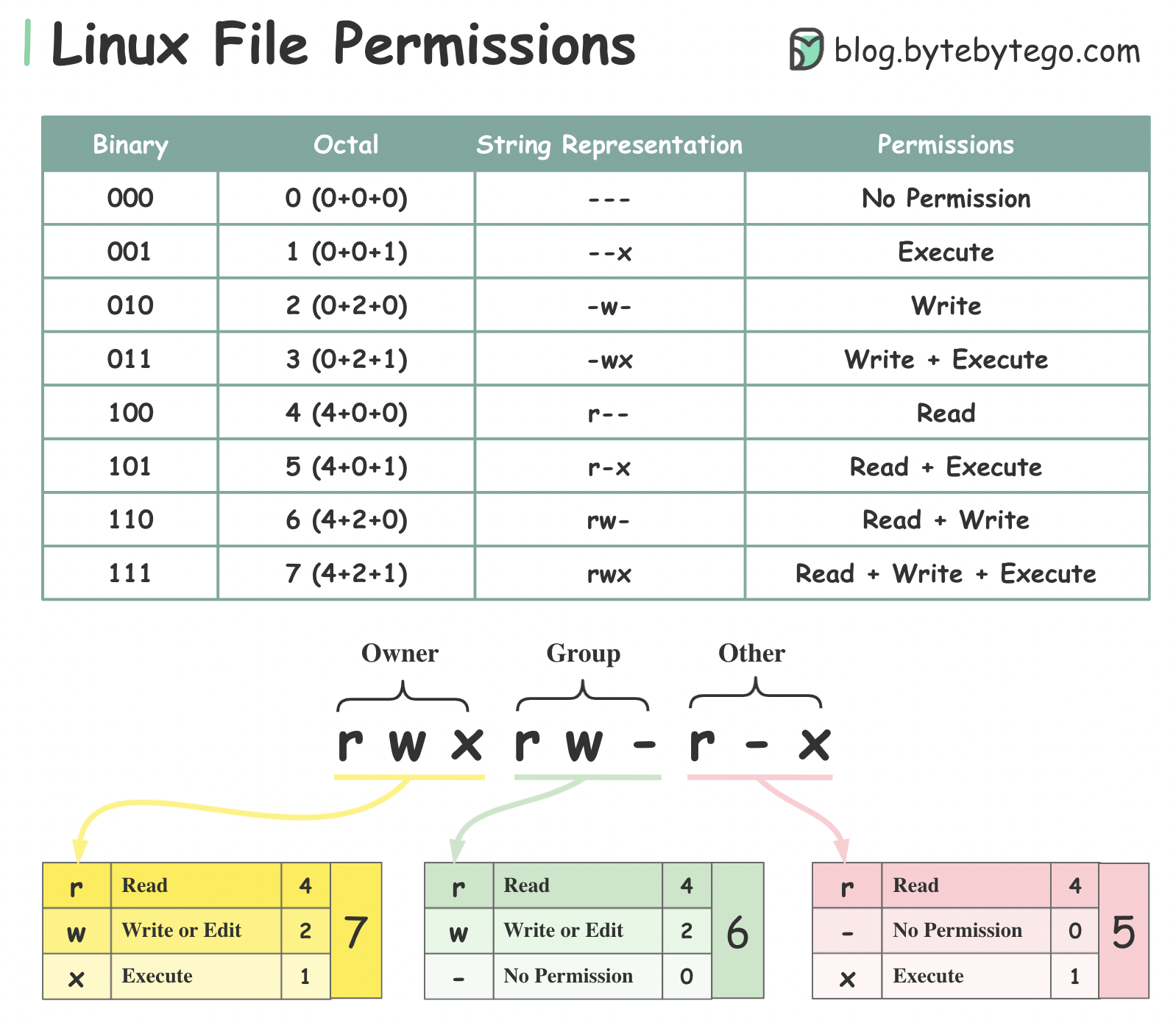
Ownership
Every file or directory is assigned 3 types of owner:
-
Owner: the owner is the user who created the file or directory.
-
Group: a group can have multiple users. All users in the group have the same permissions to access the file or directory.
-
Other: other means those users who are not owners or members of the group.
Permission
There are only three types of permissions for a file or directory.
-
Read (r): the read permission allows the user to read a file.
-
Write (w): the write permission allows the user to change the content of the file.
-
Execute (x): the execute permission allows a file to be executed.