mirror of
https://github.com/ByteByteGoHq/system-design-101.git
synced 2026-04-06 10:17:24 -04:00
 ee4b7305a2
This PR adds all the guides from [Visual
Guides](https://bytebytego.com/guides/) section on bytebytego to the
repository with proper links.

- [x] Markdown files for guides and categories are placed inside
`data/guides` and `data/categories`
- [x] Guide links in readme are auto-generated using
`scripts/readme.ts`. Everytime you run the script `npm run
update-readme`, it reads the categories and guides from the above
mentioned folders, generate production links for guides and categories
and populate the table of content in the readme. This ensures that any
future guides and categories will automatically get added to the readme.
- [x] Sorting inside the readme matches the actual category and guides
sorting on production
1.1 KiB
1.1 KiB
title, description, image, createdAt, draft, categories, tags
| title | description | image | createdAt | draft | categories | tags | |||
|---|---|---|---|---|---|---|---|---|---|
| Key Concepts to Understand Database Sharding | Explore key concepts of database sharding with vertical/horizontal strategies. | https://assets.bytebytego.com/diagrams/0096-dbshards.png | 2024-03-09 | false |
|
|
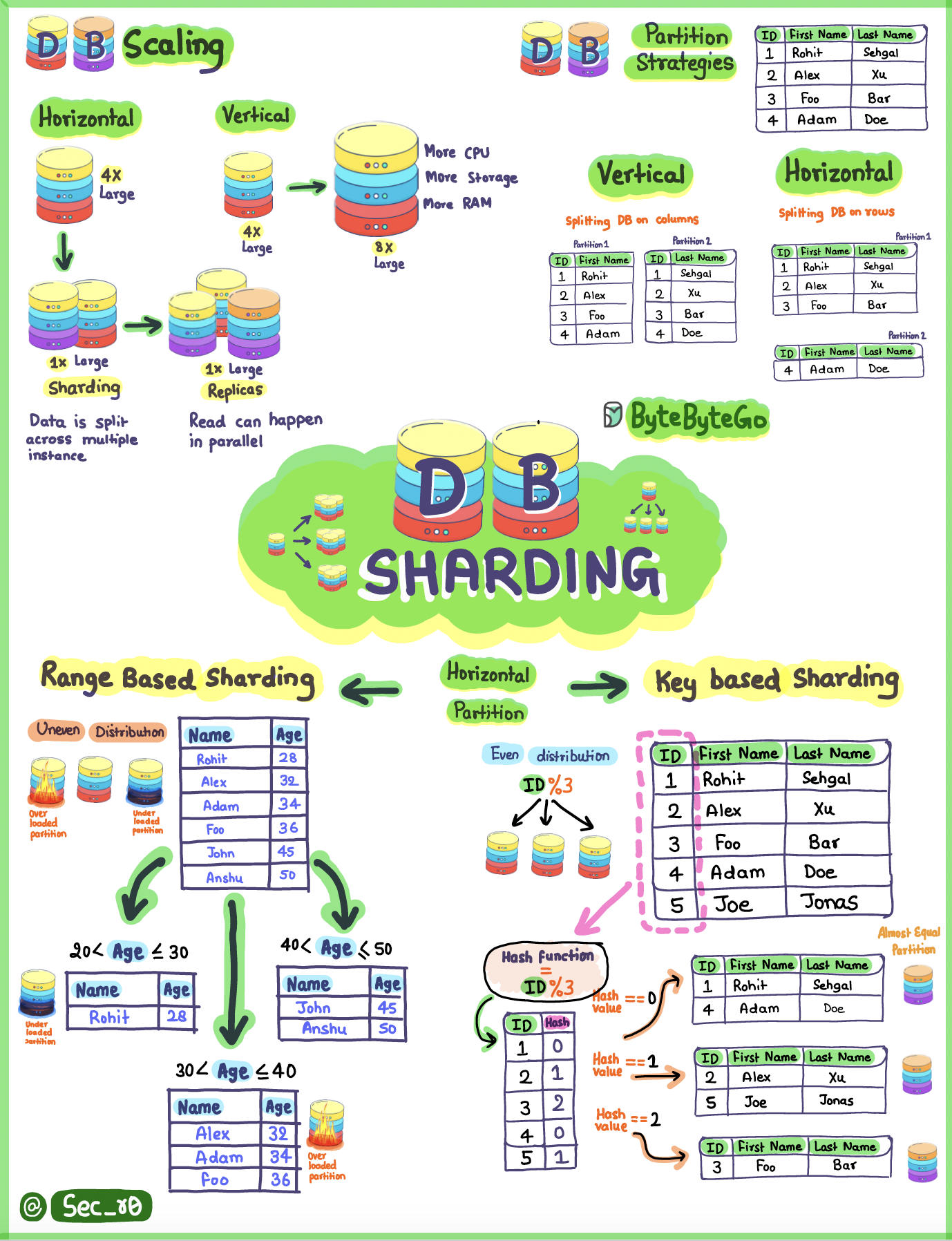
In this concise and visually engaging resource, we break down the key concepts of database partitioning, explaining both vertical and horizontal strategies.
Range-Based Sharding
Splitting your data into distinct ranges. Think of it as organizing your books by genre on separate shelves.
Key-Based Sharding (with a dash of %3 hash)
Imagine each piece of data having a unique key, and we distribute them based on a specific rule. It's like sorting your playing cards by suit and number.
Directory-Based Sharding
A directory, like a phone book, helps you quickly find the information you need. Similarly, this technique uses a directory to route data efficiently.