mirror of
https://github.com/ByteByteGoHq/system-design-101.git
synced 2026-04-02 00:57:24 -04:00
 ee4b7305a2
This PR adds all the guides from [Visual
Guides](https://bytebytego.com/guides/) section on bytebytego to the
repository with proper links.

- [x] Markdown files for guides and categories are placed inside
`data/guides` and `data/categories`
- [x] Guide links in readme are auto-generated using
`scripts/readme.ts`. Everytime you run the script `npm run
update-readme`, it reads the categories and guides from the above
mentioned folders, generate production links for guides and categories
and populate the table of content in the readme. This ensures that any
future guides and categories will automatically get added to the readme.
- [x] Sorting inside the readme matches the actual category and guides
sorting on production
1.0 KiB
1.0 KiB
title, description, image, createdAt, draft, categories, tags
| title | description | image | createdAt | draft | categories | tags | |||
|---|---|---|---|---|---|---|---|---|---|
| iQIYI Database Selection Trees | Explore iQIYI's database selection process for relational and NoSQL. | https://assets.bytebytego.com/diagrams/0215-how-to-choose-db.png | 2024-03-01 | false |
|
|
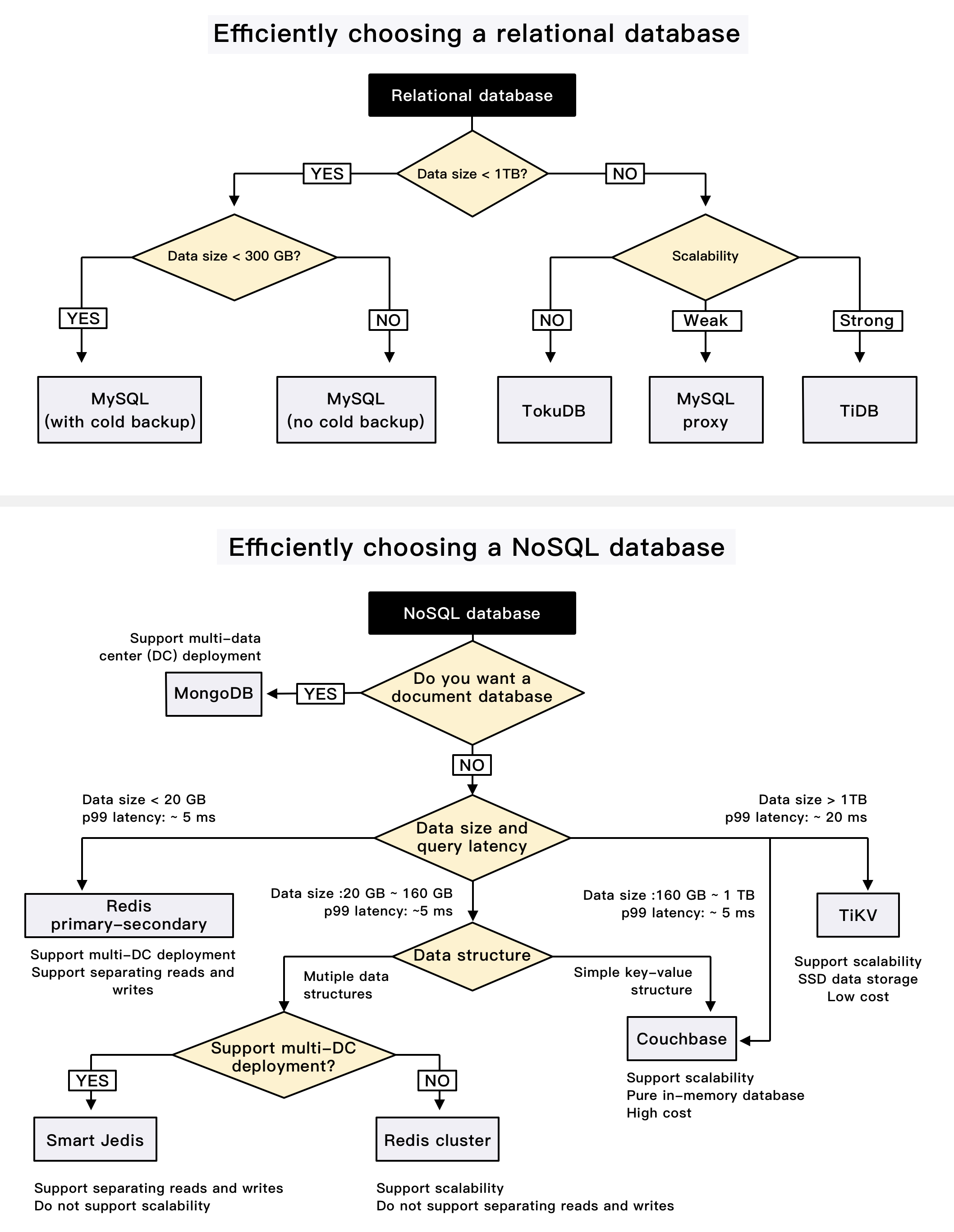
One picture is worth a thousand words.
iQIYI is one of the largest online video sites in the world, with over 500 million monthly active users. Let's look at how they choose relational and NoSQL databases.
The following databases are used at iQIYI:
- MySQL
- Redis
- TiDB: a hybrid transactional/analytical processing (HTAP) distributed database
- Couchbase: distributed multi-model NoSQL document-oriented database
- TokuDB: open-source storage engine for MySQL and MariaDB.
- Big data analytical systems, like Hive and Impala
- Other databases, like MongoDB, HiGraph, and TiKV
The database selection trees below explain how they choose a database.