mirror of
https://github.com/ByteByteGoHq/system-design-101.git
synced 2026-04-11 12:27:24 -04:00
 ee4b7305a2
This PR adds all the guides from [Visual
Guides](https://bytebytego.com/guides/) section on bytebytego to the
repository with proper links.

- [x] Markdown files for guides and categories are placed inside
`data/guides` and `data/categories`
- [x] Guide links in readme are auto-generated using
`scripts/readme.ts`. Everytime you run the script `npm run
update-readme`, it reads the categories and guides from the above
mentioned folders, generate production links for guides and categories
and populate the table of content in the readme. This ensures that any
future guides and categories will automatically get added to the readme.
- [x] Sorting inside the readme matches the actual category and guides
sorting on production
1.5 KiB
1.5 KiB
title, description, image, createdAt, draft, categories, tags
| title | description | image | createdAt | draft | categories | tags | |||
|---|---|---|---|---|---|---|---|---|---|
| Internet Traffic Routing Policies | Explore internet traffic routing policies for efficient network management. | https://assets.bytebytego.com/diagrams/0106-internet-traffic-routing-policies.png | 2024-01-31 | false |
|
|
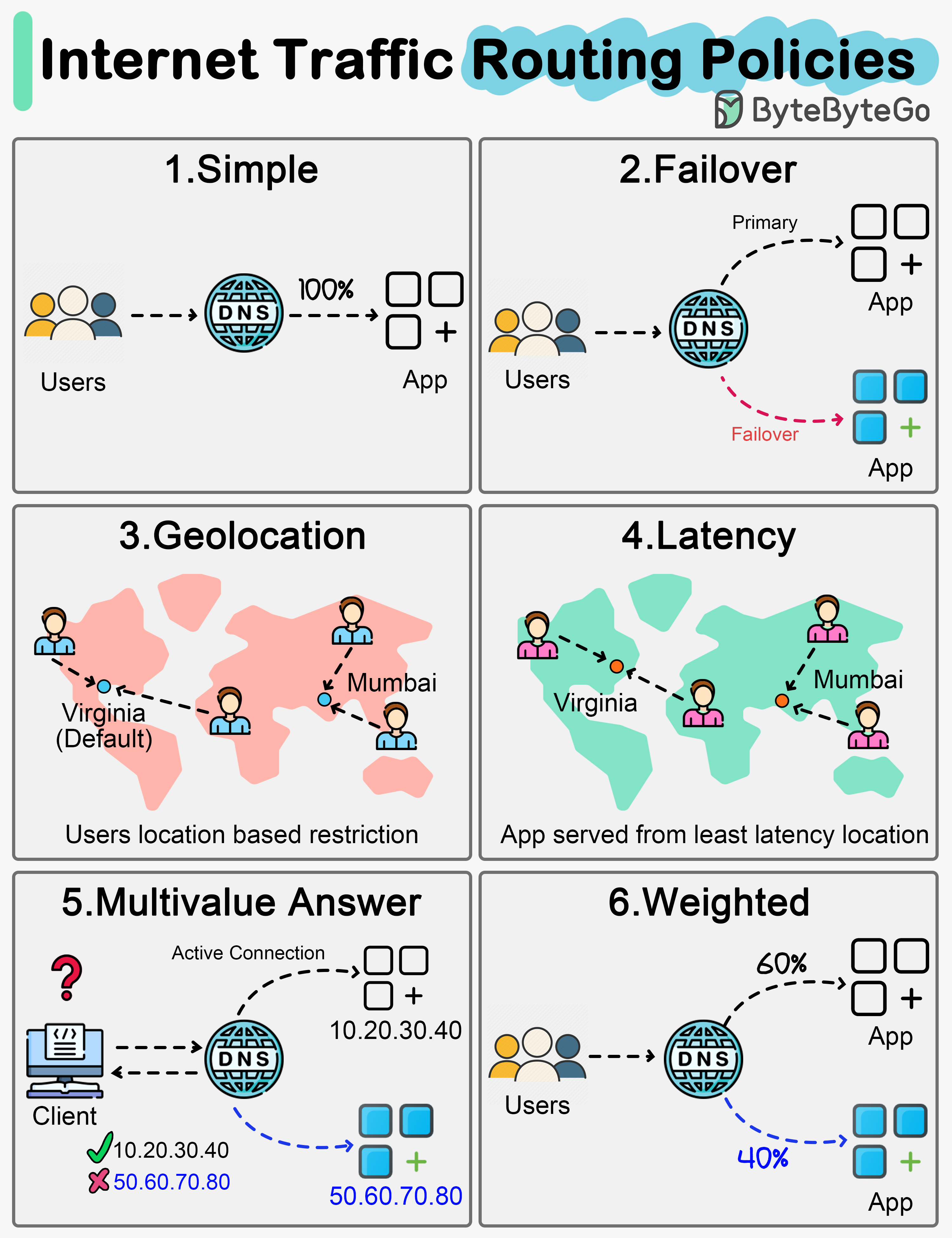
Internet traffic routing policies (DNS policies) play a crucial role in efficiently managing and directing network traffic. Let's discuss the different types of policies.
- Simple: Directs all traffic to a single endpoint based on a standard DNS query without any special conditions or requirements.
- Failover: Routes traffic to a primary endpoint but automatically switches to a secondary endpoint if the primary is unavailable.
- Geolocation: Distributes traffic based on the geographic location of the requester, aiming to provide localized content or services.
- Latency: Directs traffic to the endpoint that provides the lowest latency for the requester, enhancing user experience with faster response times.
- Multivalue Answer: Responds to DNS queries with multiple IP addresses, allowing the client to select an endpoint. However, it should not be considered a replacement for a load balancer.
- Weighted Routing Policy: Distributes traffic across multiple endpoints with assigned weights, allowing for proportional traffic distribution based on these weights.