mirror of
https://github.com/ByteByteGoHq/system-design-101.git
synced 2026-04-02 00:57:24 -04:00
 ee4b7305a2
This PR adds all the guides from [Visual
Guides](https://bytebytego.com/guides/) section on bytebytego to the
repository with proper links.

- [x] Markdown files for guides and categories are placed inside
`data/guides` and `data/categories`
- [x] Guide links in readme are auto-generated using
`scripts/readme.ts`. Everytime you run the script `npm run
update-readme`, it reads the categories and guides from the above
mentioned folders, generate production links for guides and categories
and populate the table of content in the readme. This ensures that any
future guides and categories will automatically get added to the readme.
- [x] Sorting inside the readme matches the actual category and guides
sorting on production
1.1 KiB
1.1 KiB
title, description, image, createdAt, draft, categories, tags
| title | description | image | createdAt | draft | categories | tags | |||
|---|---|---|---|---|---|---|---|---|---|
| HTTP/1 -> HTTP/2 -> HTTP/3 | Explore the evolution of HTTP: from HTTP/1 to the latest HTTP/3. | https://assets.bytebytego.com/diagrams/0101-http-1-http-2-http-3.png | 2024-03-02 | false |
|
|
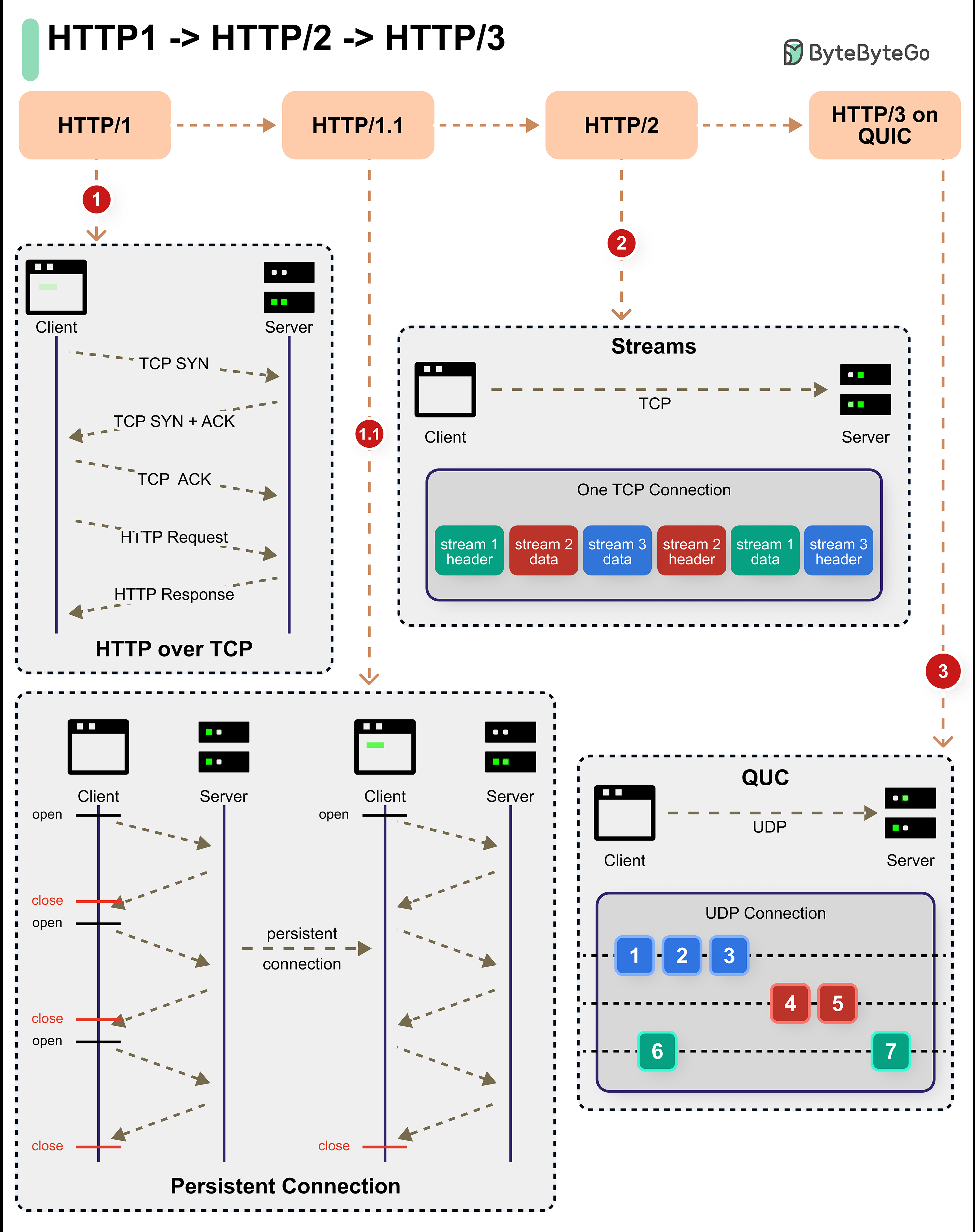
HTTP 1 started in 1996 followed by HTTP 1.1 the very next year. In 2015, HTTP 2 came about and in 2019 we got HTTP 3.
With each iteration, the protocol has evolved in new and interesting ways.
- HTTP 1 (and its sub-versions) introduced features like persistent connections, pipelining, and the concept of headers. The protocol was built on top of TCP and provided a reliable way of communication over the World Wide Web. It is still used despite being over 25 years old.
- HTTP 2 brought new features such as multiplexing, stream prioritization, server push, and HPACK compression. However, it still used TCP as the underlying protocol.
- HTTP 3 uses Google’s QUIC, which is built on top of UDP. In other words, HTTP 3 has moved away from TCP.