 ee4b7305a2
This PR adds all the guides from [Visual
Guides](https://bytebytego.com/guides/) section on bytebytego to the
repository with proper links.

- [x] Markdown files for guides and categories are placed inside
`data/guides` and `data/categories`
- [x] Guide links in readme are auto-generated using
`scripts/readme.ts`. Everytime you run the script `npm run
update-readme`, it reads the categories and guides from the above
mentioned folders, generate production links for guides and categories
and populate the table of content in the readme. This ensures that any
future guides and categories will automatically get added to the readme.
- [x] Sorting inside the readme matches the actual category and guides
sorting on production
1.1 KiB
title, description, image, createdAt, draft, categories, tags
| title | description | image | createdAt | draft | categories | tags | |||
|---|---|---|---|---|---|---|---|---|---|
| HTTP Cookies Explained With a Simple Diagram | Understand HTTP cookies with a simple diagram and clear explanations. | https://assets.bytebytego.com/diagrams/0153-cookies.png | 2024-02-18 | false |
|
|
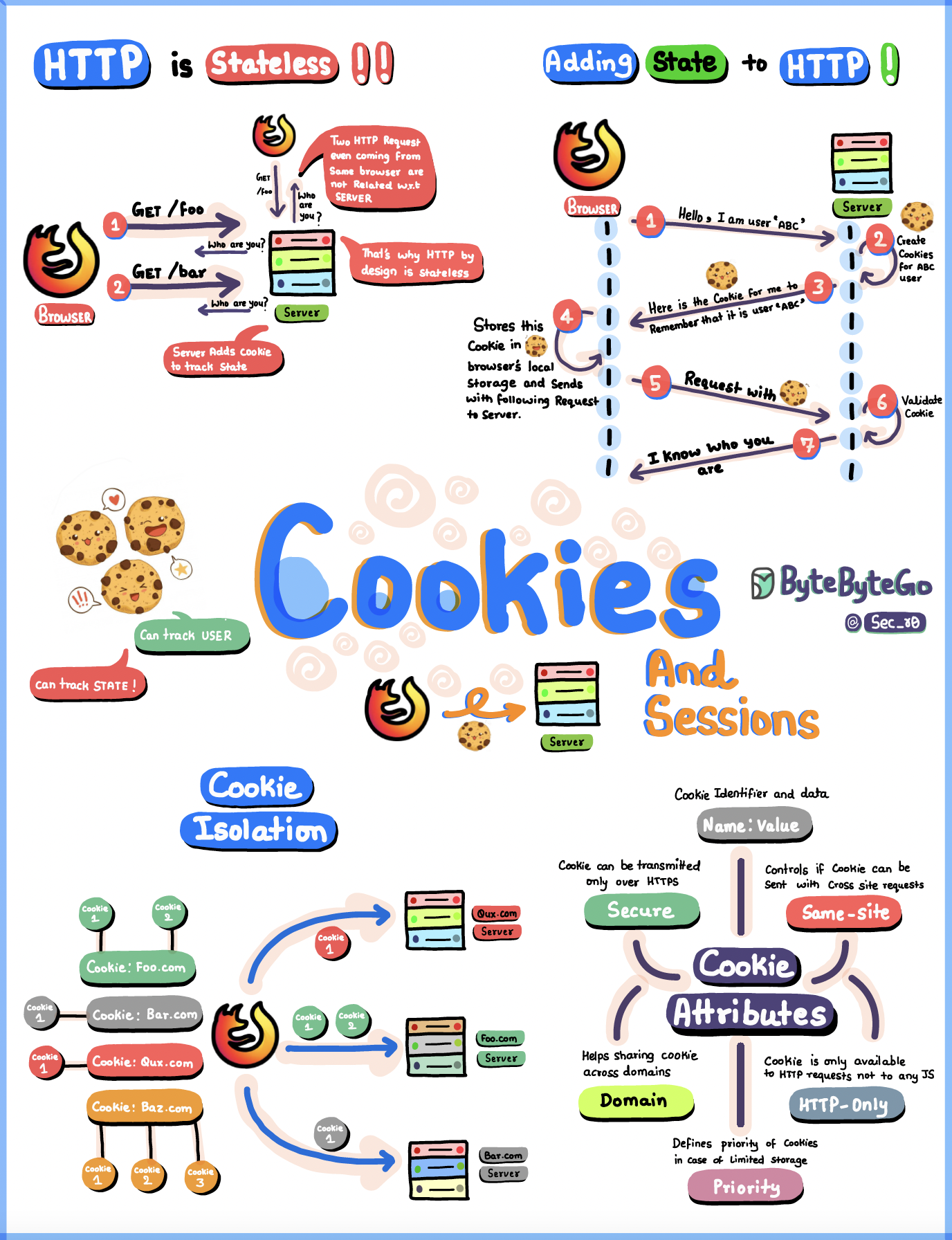
HTTP, the language of the web, is naturally "stateless." But hey, we all want that seamless, continuous browsing experience, right? Enter the unsung heroes - Cookies!
So, here's the scoop in this cookie flyer:
-
HTTP is like a goldfish with no memory - it forgets you instantly! But cookies swoop in to the rescue, adding that "session secret sauce" to your web interactions.
-
Cookies? Think of them as little notes you pass to the web server, saying, "Remember me, please!" And yes, they're stored there, like cherished mementos.
-
Browsers are like cookie bouncers, making sure your cookies don't party crash at the wrong website.
-
Finally, meet the cookie celebrities - SameSite, Name, Value, Secure, Domain, and HttpOnly. They're the cool kids setting the rules in the cookie jar!