 ee4b7305a2
This PR adds all the guides from [Visual
Guides](https://bytebytego.com/guides/) section on bytebytego to the
repository with proper links.

- [x] Markdown files for guides and categories are placed inside
`data/guides` and `data/categories`
- [x] Guide links in readme are auto-generated using
`scripts/readme.ts`. Everytime you run the script `npm run
update-readme`, it reads the categories and guides from the above
mentioned folders, generate production links for guides and categories
and populate the table of content in the readme. This ensures that any
future guides and categories will automatically get added to the readme.
- [x] Sorting inside the readme matches the actual category and guides
sorting on production
1.5 KiB
title, description, image, createdAt, draft, categories, tags
| title | description | image | createdAt | draft | categories | tags | |||
|---|---|---|---|---|---|---|---|---|---|
| How GraphQL Works at LinkedIn | Learn how LinkedIn uses GraphQL to improve its development workflow. | https://assets.bytebytego.com/diagrams/0209-graphql-linkedin.jpeg | 2024-02-12 | false |
|
|
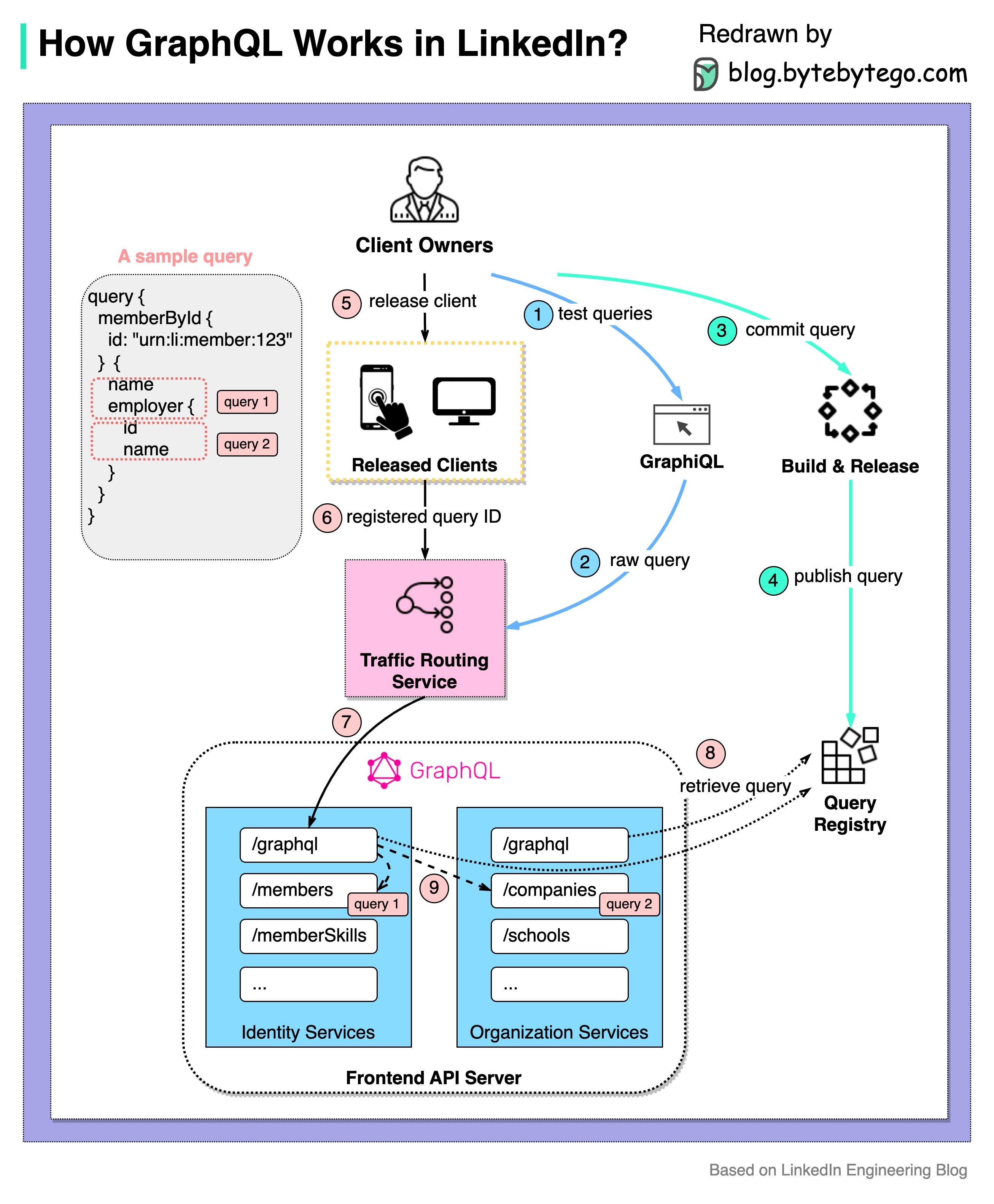
The diagram above shows how LinkedIn adopts GraphQL.
“Moving to GraphQL was a huge initiative that changed the development workflow for thousands of engineers...” [1]
The overall workflow after adopting GraphQL has 3 parts:
Part 1 - Edit and Test a Query
Steps 1-2: The client-side developer develops a query and tests with backend services.
Part 2 - Register a Query
Steps 3-4: The client-side developer commits the query and publishes the query to the query registry.
Part 3 - Use in Production
Step 5: The query is released together with the client code.
Steps 6-7: The routing metadata is included with each registered query. The metadata is used at the traffic routing tier to route the incoming requests to the correct service cluster.
Step 8: The registered queries are cached at service runtime.
Step 9: The sample query goes to the identity service first to retrieve members and then goes to the organization service to retrieve company information.
LinkedIn doesn’t deploy a GraphQL gateway for two reasons:
- Prevent an additional network hop
- Avoid single point of failure