mirror of
https://github.com/ByteByteGoHq/system-design-101.git
synced 2026-04-15 14:07:24 -04:00
 ee4b7305a2
This PR adds all the guides from [Visual
Guides](https://bytebytego.com/guides/) section on bytebytego to the
repository with proper links.

- [x] Markdown files for guides and categories are placed inside
`data/guides` and `data/categories`
- [x] Guide links in readme are auto-generated using
`scripts/readme.ts`. Everytime you run the script `npm run
update-readme`, it reads the categories and guides from the above
mentioned folders, generate production links for guides and categories
and populate the table of content in the readme. This ensures that any
future guides and categories will automatically get added to the readme.
- [x] Sorting inside the readme matches the actual category and guides
sorting on production
1.1 KiB
1.1 KiB
title, description, image, createdAt, draft, categories, tags
| title | description | image | createdAt | draft | categories | tags | |||
|---|---|---|---|---|---|---|---|---|---|
| How to Decide Which Type of Database to Use | A guide to choosing the right database for your specific needs. | https://assets.bytebytego.com/diagrams/0160-database-types.jpg | 2024-02-17 | false |
|
|
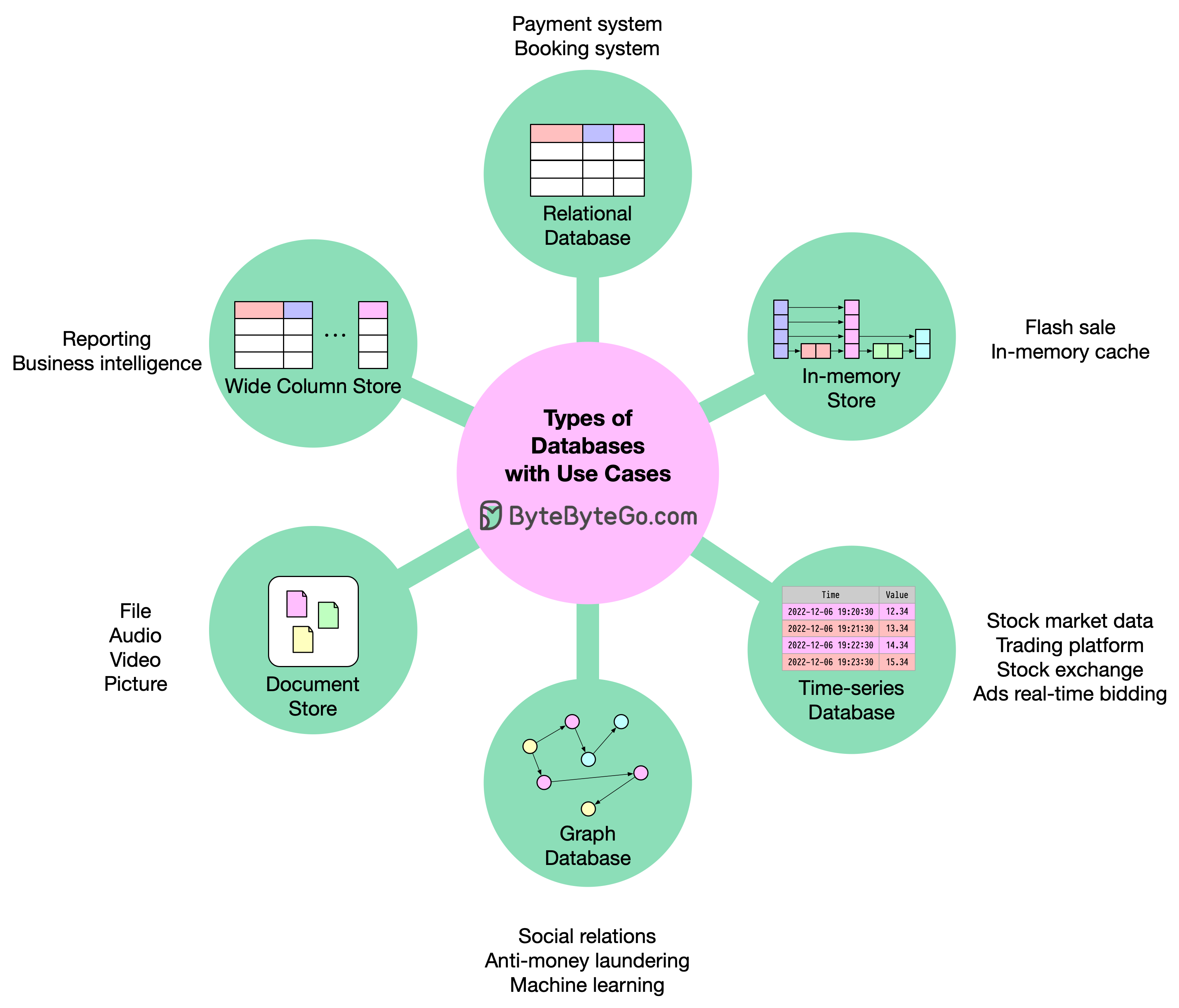
There are hundreds or even thousands of databases available today, such as Oracle, MySQL, MariaDB, SQLite, PostgreSQL, Redis, ClickHouse, MongoDB, S3, Ceph, etc. How do you select the architecture for your system? My short summary is as follows:
Database Types
-
Relational database: Almost anything could be solved by them.
-
In-memory store: Their speed and limited data size make them ideal for fast operations.
-
Time-series database: Store and manage time-stamped data.
-
Graph database: It is suitable for complex relationships between unstructured objects.
-
Document store: They are good for large immutable data.
-
Wide column store: They are usually used for big data, analytics, reporting, etc., which needs denormalized data.