 ee4b7305a2
This PR adds all the guides from [Visual
Guides](https://bytebytego.com/guides/) section on bytebytego to the
repository with proper links.

- [x] Markdown files for guides and categories are placed inside
`data/guides` and `data/categories`
- [x] Guide links in readme are auto-generated using
`scripts/readme.ts`. Everytime you run the script `npm run
update-readme`, it reads the categories and guides from the above
mentioned folders, generate production links for guides and categories
and populate the table of content in the readme. This ensures that any
future guides and categories will automatically get added to the readme.
- [x] Sorting inside the readme matches the actual category and guides
sorting on production
2.7 KiB
title, description, image, createdAt, draft, categories, tags
| title | description | image | createdAt | draft | categories | tags | |||
|---|---|---|---|---|---|---|---|---|---|
| How do we manage sensitive data in a system? | A cheat sheet for managing sensitive data in a system. | https://assets.bytebytego.com/diagrams/0058-cheatsheet-for-managing-sensitive-data.png | 2024-02-25 | false |
|
|
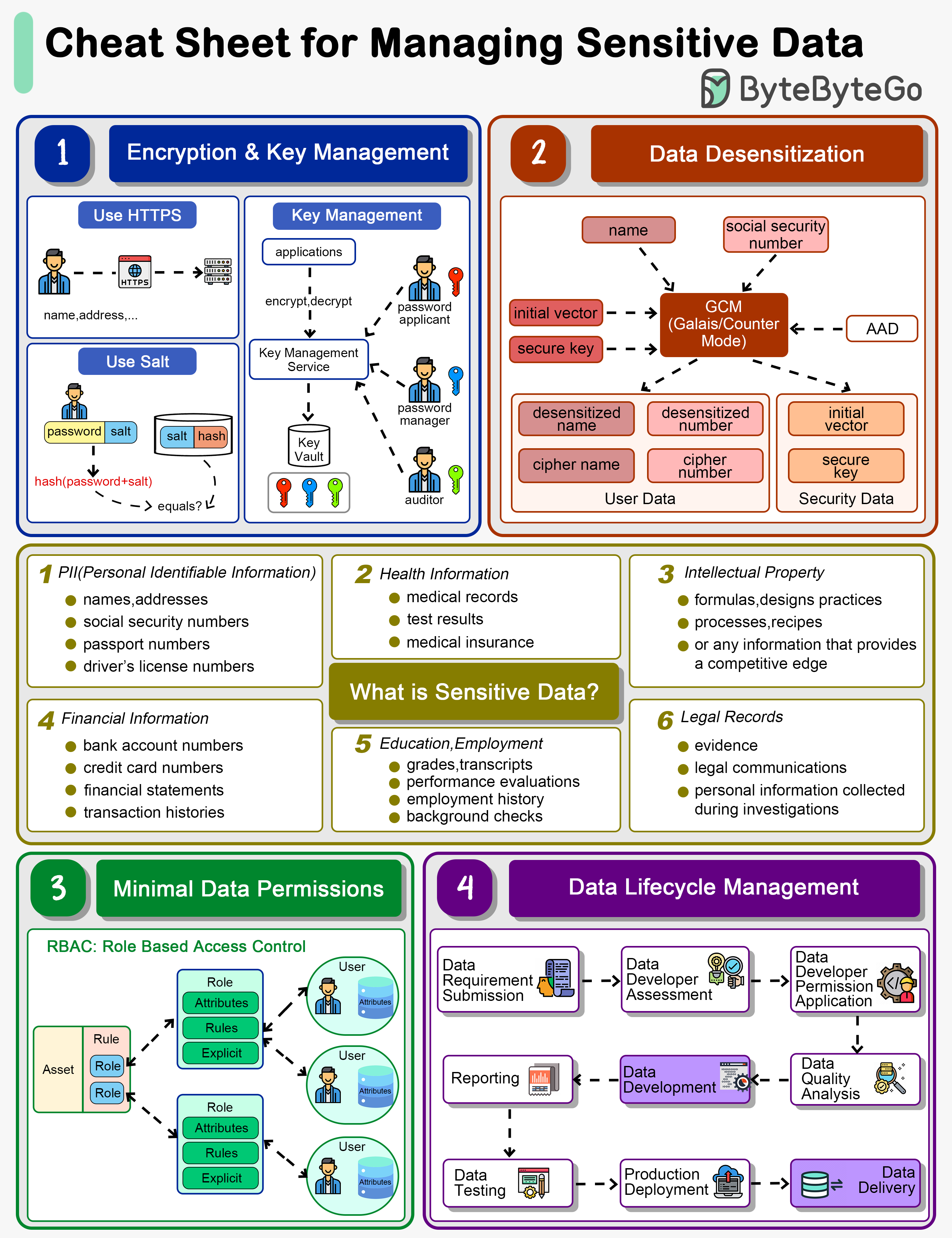
The cheat sheet below shows a list of guidelines.
What is Sensitive Data?
Personal Identifiable Information (PII), health information, intellectual property, financial information, education and legal records are all sensitive data.
Most countries have laws and regulations that require the protection of sensitive data. For example, the General Data Protection Regulation (GDPR) in the European Union sets stringent rules for data protection and privacy. Non-compliance with such regulations can result in hefty fines, legal actions, and sanctions against the violating entity.
When we design systems, we need to design for data protection.
Encryption & Key Management
The data transmission needs to be encrypted using SSL. Passwords shouldn’t be stored in plain text.
For key storage, we design different roles including password applicant, password manager and auditor, all holding one piece of the key. We will need all three keys to open a lock.
Data Desensitization
Data desensitization, also known as data anonymization or data sanitization, refers to the process of removing or modifying personal information from a dataset so that individuals cannot be readily identified. This practice is crucial in protecting individuals' privacy and ensuring compliance with data protection laws and regulations. Data desensitization is often used when sharing data externally, such as for research or statistical analysis, or even internally within an organization, to limit access to sensitive information.
Algorithms like GCM store cipher data and keys separately so that hackers are not able to decipher the user data.
Minimal Data Permissions
To protect sensitive data, we should grant minimal permissions to the users. Often we design Role-Based Access Control (RBAC) to restrict access to authorized users based on their roles within an organization. It is a widely used access control mechanism that simplifies the management of user permissions, ensuring that users have access to only the information and resources necessary for their roles.
Data Lifecycle Management
When we develop data products like reports or data feeds, we need to design a process to maintain data quality. Data developers should be granted with necessary permissions during development. After the data is online, they should be revoked from the data access.