 ee4b7305a2
This PR adds all the guides from [Visual
Guides](https://bytebytego.com/guides/) section on bytebytego to the
repository with proper links.

- [x] Markdown files for guides and categories are placed inside
`data/guides` and `data/categories`
- [x] Guide links in readme are auto-generated using
`scripts/readme.ts`. Everytime you run the script `npm run
update-readme`, it reads the categories and guides from the above
mentioned folders, generate production links for guides and categories
and populate the table of content in the readme. This ensures that any
future guides and categories will automatically get added to the readme.
- [x] Sorting inside the readme matches the actual category and guides
sorting on production
1.7 KiB
title, description, image, createdAt, draft, categories, tags
| title | description | image | createdAt | draft | categories | tags | |||
|---|---|---|---|---|---|---|---|---|---|
| How do we manage configurations in a system? | Comparing traditional configuration management with Infrastructure as Code (IaC). | https://assets.bytebytego.com/diagrams/0056-how-we-manage-configuration.png | 2024-02-19 | false |
|
|
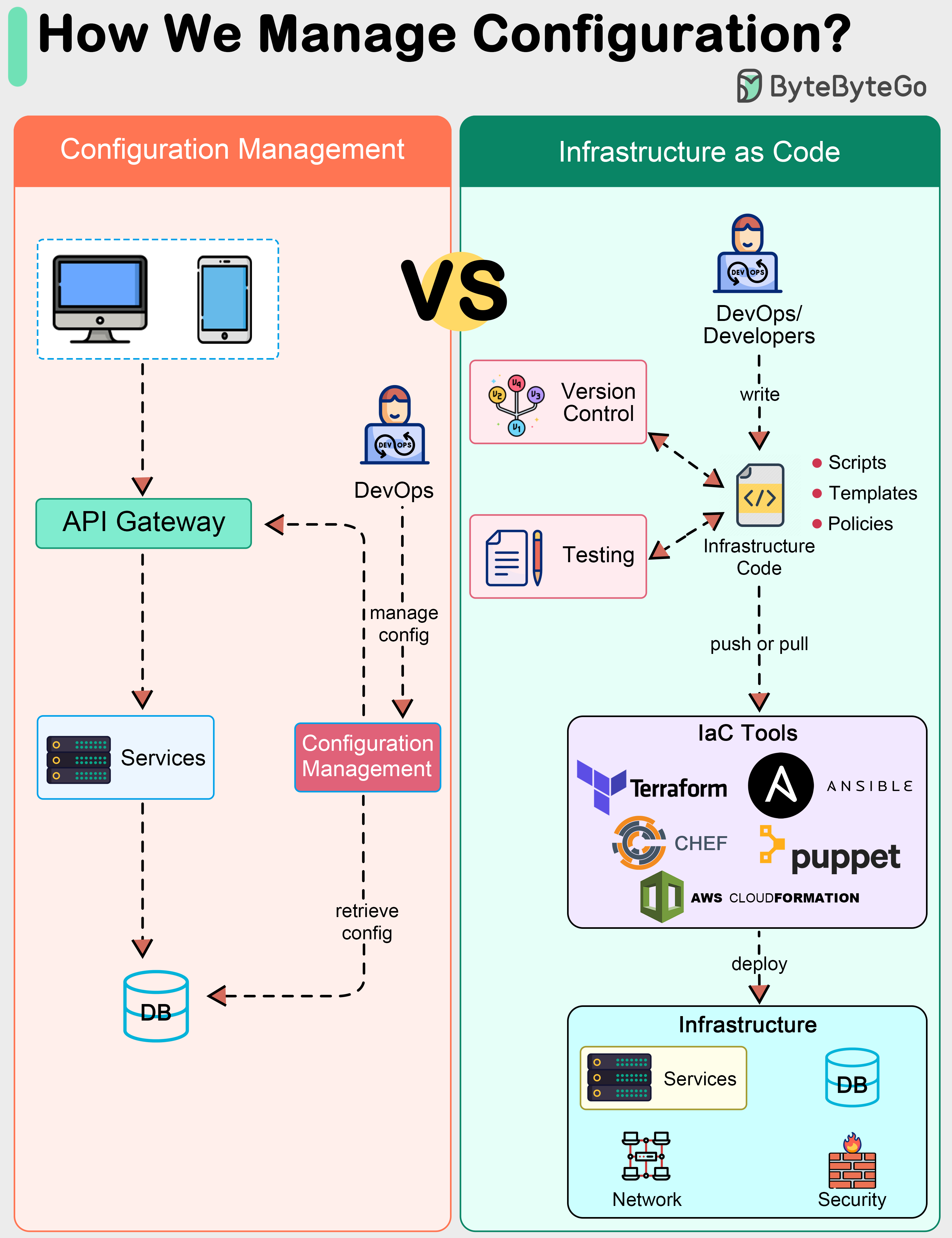
The diagram shows a comparison between traditional configuration management and IaC (Infrastructure as Code).
Configuration Management
Configuration Management is designed to manage and provision IT infrastructure through systematic and repeatable processes. This is critical for ensuring that the system performs as intended.
Traditional configuration management focuses on maintaining the desired state of the system's configuration items, such as servers, network devices, and applications, after they have been provisioned.
It usually involves initial manual setup by DevOps. Changes are managed by step-by-step commands.
What is IaC?
IaC, on the other hand, represents a shift in how infrastructure is provisioned and managed, treating infrastructure setup and changes as software development practices.
IaC automates the provisioning of infrastructure, starting and managing the system through code. It often uses a declarative approach, where the desired state of the infrastructure is described.
Tools like Terraform, AWS CloudFormation, Chef, and Puppet are used to define infrastructure in code files that are source controlled.
IaC represents an evolution towards automation, repeatability, and the application of software development practices to infrastructure management.