mirror of
https://github.com/ByteByteGoHq/system-design-101.git
synced 2026-04-01 16:57:23 -04:00
 ee4b7305a2
This PR adds all the guides from [Visual
Guides](https://bytebytego.com/guides/) section on bytebytego to the
repository with proper links.

- [x] Markdown files for guides and categories are placed inside
`data/guides` and `data/categories`
- [x] Guide links in readme are auto-generated using
`scripts/readme.ts`. Everytime you run the script `npm run
update-readme`, it reads the categories and guides from the above
mentioned folders, generate production links for guides and categories
and populate the table of content in the readme. This ensures that any
future guides and categories will automatically get added to the readme.
- [x] Sorting inside the readme matches the actual category and guides
sorting on production
1.1 KiB
1.1 KiB
title, description, image, createdAt, draft, categories, tags
| title | description | image | createdAt | draft | categories | tags | |||
|---|---|---|---|---|---|---|---|---|---|
| How to Learn Elasticsearch | Learn about Elasticsearch features, use cases, and core data structures. | https://assets.bytebytego.com/diagrams/0182-elastic-search.jpeg | 2024-03-08 | false |
|
|
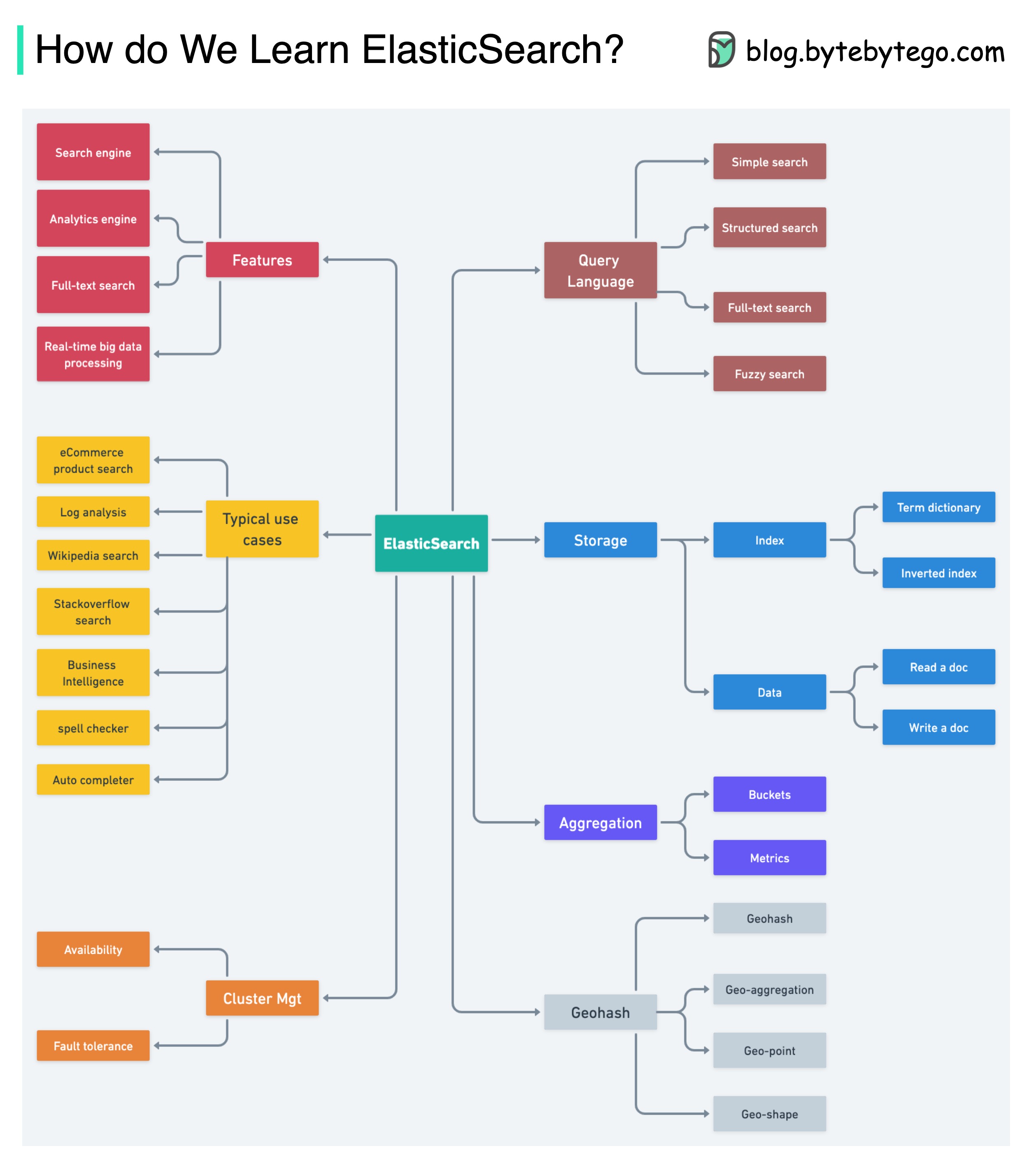
Based on the Lucene library, Elasticsearch provides search capabilities. It provides a distributed, multitenant-capable full-text search engine with an HTTP web interface and schema-free JSON documents. The diagram above shows the outline.
Features of ElasticSearch:
- Real-time full-text search
- Analytics engine
- Distributed Lucene
ElasticSearch use cases:
- Product search on an eCommerce website
- Log analysis
- Auto completer, spell checker
- Business intelligence analysis
- Full-text search on Wikipedia
- Full-text search on StackOverflow
The core of ElasticSearch lies in the data structure and indexing. It is important to understand how ES builds the term dictionary using LSM Tree (Log-Strucutured Merge Tree).