 ee4b7305a2
This PR adds all the guides from [Visual
Guides](https://bytebytego.com/guides/) section on bytebytego to the
repository with proper links.

- [x] Markdown files for guides and categories are placed inside
`data/guides` and `data/categories`
- [x] Guide links in readme are auto-generated using
`scripts/readme.ts`. Everytime you run the script `npm run
update-readme`, it reads the categories and guides from the above
mentioned folders, generate production links for guides and categories
and populate the table of content in the readme. This ensures that any
future guides and categories will automatically get added to the readme.
- [x] Sorting inside the readme matches the actual category and guides
sorting on production
2.5 KiB
title, description, image, createdAt, draft, categories, tags
| title | description | image | createdAt | draft | categories | tags | |||
|---|---|---|---|---|---|---|---|---|---|
| How to Detect Node Failures in Distributed Systems | Explore heartbeat mechanisms for detecting node failures in distributed systems. | https://assets.bytebytego.com/diagrams/0370-top-6-heartbeat-detection-mechanisms.png | 2024-02-03 | false |
|
|
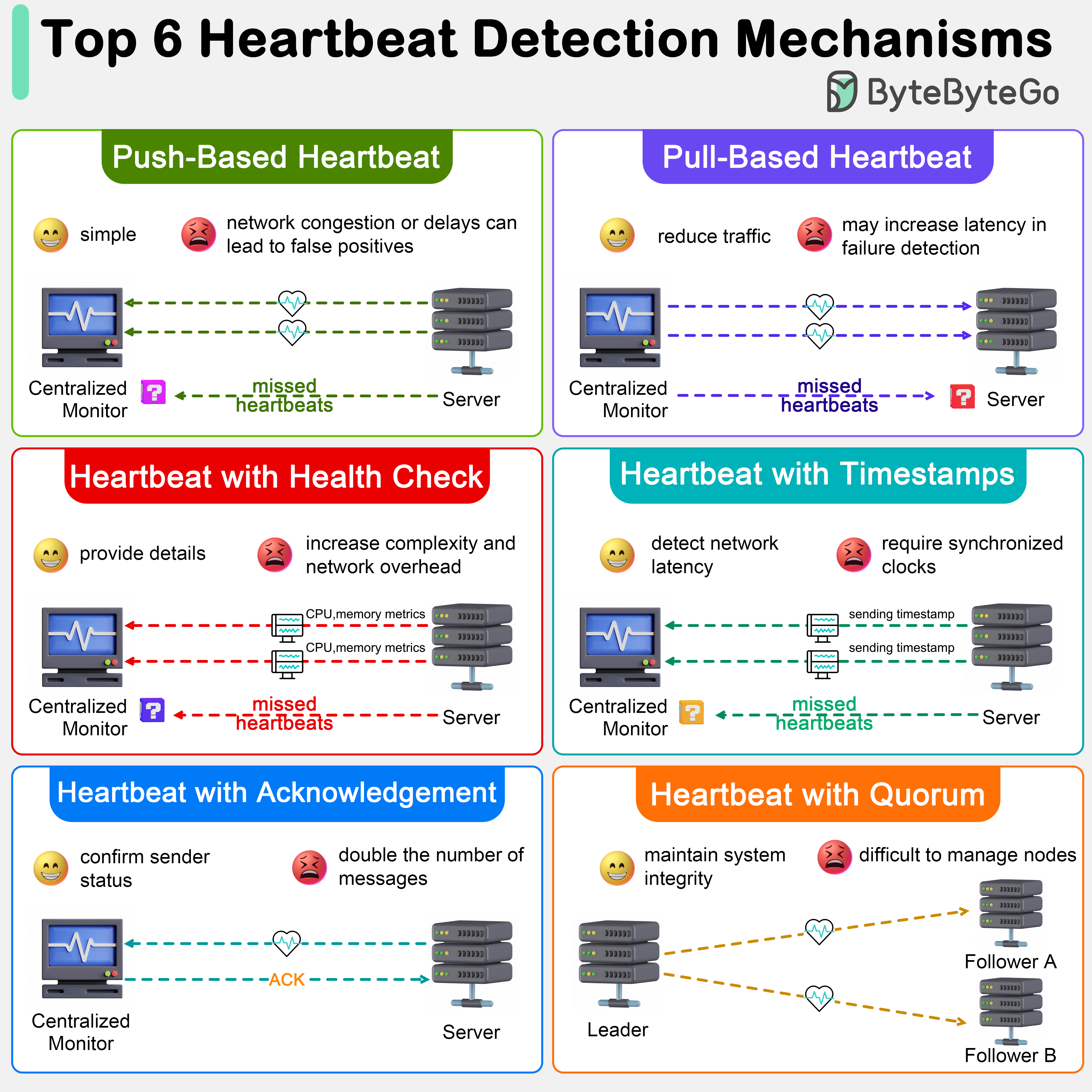
Heartbeat mechanisms are crucial in distributed systems for monitoring the health and status of various components. Here are several types of heartbeat detection mechanisms commonly used in distributed systems:
Push-Based Heartbeat
The most basic form of heartbeat involves a periodic signal sent from one node to another or to a monitoring service. If the heartbeat signals stop arriving within a specified interval, the system assumes that the node has failed. This is simple to implement, but network congestion can lead to false positives.
Pull-Based Heartbeat
Instead of nodes sending heartbeats actively, a central monitor might periodically "pull" status information from nodes. It reduces network traffic but might increase latency in failure detection.
Heartbeat with Health Check
This includes diagnostic information about the node's health in the heartbeat signal. This information can include CPU usage, memory usage, or application-specific metrics. It Provides more detailed information about the node, allowing for more nuanced decision-making. However, it increases complexity and potential for larger network overhead.
Heartbeat with Timestamps
Heartbeats that include timestamps can help the receiving node or service determine not just if a node is alive, but also if there are network delays affecting communication.
Heartbeat with Acknowledgement
The receiver of the heartbeat message must send back an acknowledgment in this model. This ensures that not only is the sender alive, but the network path between the sender and receiver is also functional.
Heartbeat with Quorum
In some distributed systems, especially those involving consensus protocols like Paxos or Raft, the concept of a quorum (a majority of nodes) is used. Heartbeats might be used to establish or maintain a quorum, ensuring that a sufficient number of nodes are operational for the system to make decisions. This brings complexity in implementation and managing quorum changes as nodes join or leave the system.