 ee4b7305a2
This PR adds all the guides from [Visual
Guides](https://bytebytego.com/guides/) section on bytebytego to the
repository with proper links.

- [x] Markdown files for guides and categories are placed inside
`data/guides` and `data/categories`
- [x] Guide links in readme are auto-generated using
`scripts/readme.ts`. Everytime you run the script `npm run
update-readme`, it reads the categories and guides from the above
mentioned folders, generate production links for guides and categories
and populate the table of content in the readme. This ensures that any
future guides and categories will automatically get added to the readme.
- [x] Sorting inside the readme matches the actual category and guides
sorting on production
1.8 KiB
title, description, image, createdAt, draft, categories, tags
| title | description | image | createdAt | draft | categories | tags | |||
|---|---|---|---|---|---|---|---|---|---|
| How Do Search Engines Work? | Explore the inner workings of search engines: crawling, indexing, and ranking. | https://assets.bytebytego.com/diagrams/0103-how-do-search-engines-work.png | 2024-03-16 | false |
|
|
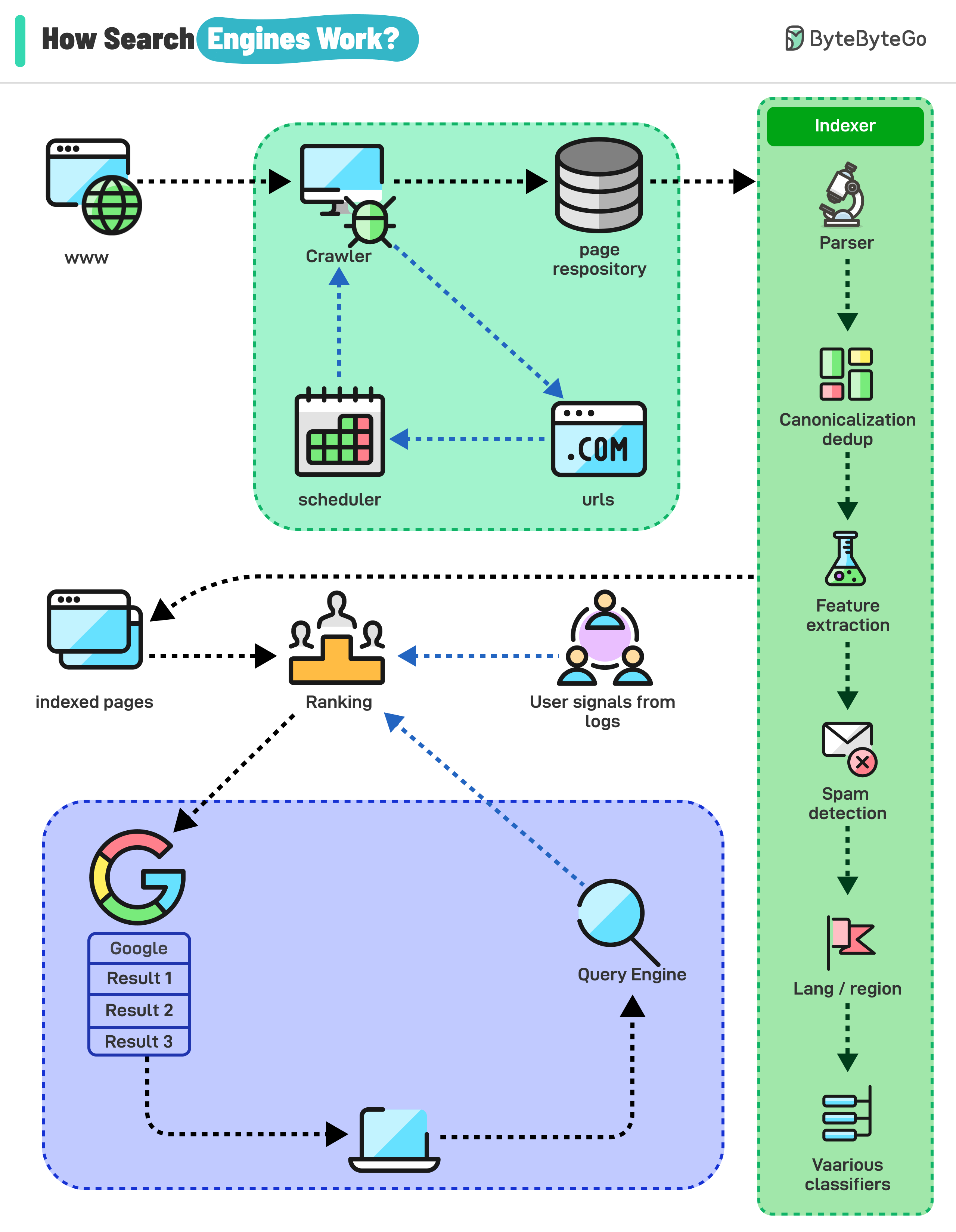
Search engines work through a combination of three core processes:
Crawling
Search engines use automated programs called "crawlers" to discover and download web pages from the internet. These crawlers start with a list of known web pages (seeds) and follow links on those pages to find new ones, creating a vast network of interconnected content.
Indexing
The information collected by the crawlers is then analyzed and organized into a massive database called an index. This process involves extracting key elements such as keywords, content type, freshness, language, and other classification signals to understand what each page is about and how relevant it might be to different search queries.
Serving Search Results
When a user enters a query, the search engine's algorithm sifts through the index to identify the most relevant and helpful pages. Here's a breakdown of how it works:
- Query Analysis: The search engine analyzes the user's query to understand its meaning and intent. This includes identifying keywords, recognizing synonyms, and interpreting context.
- Retrieval: The search engine retrieves relevant pages from its vast index based on the query analysis. This involves matching the query's keywords with the indexed content of web pages.
- Ranking: The retrieved pages are then ranked based on their relevance and other factors.