mirror of
https://github.com/ByteByteGoHq/system-design-101.git
synced 2026-04-02 17:07:24 -04:00
 ee4b7305a2
This PR adds all the guides from [Visual
Guides](https://bytebytego.com/guides/) section on bytebytego to the
repository with proper links.

- [x] Markdown files for guides and categories are placed inside
`data/guides` and `data/categories`
- [x] Guide links in readme are auto-generated using
`scripts/readme.ts`. Everytime you run the script `npm run
update-readme`, it reads the categories and guides from the above
mentioned folders, generate production links for guides and categories
and populate the table of content in the readme. This ensures that any
future guides and categories will automatically get added to the readme.
- [x] Sorting inside the readme matches the actual category and guides
sorting on production
1.6 KiB
1.6 KiB
title, description, image, createdAt, draft, categories, tags
| title | description | image | createdAt | draft | categories | tags | ||||
|---|---|---|---|---|---|---|---|---|---|---|
| Explaining 9 Types of API Testing | Learn about 9 different types of API testing with detailed explanations. | https://assets.bytebytego.com/diagrams/0017-9-types-of-api-testing.png | 2024-03-10 | false |
|
|
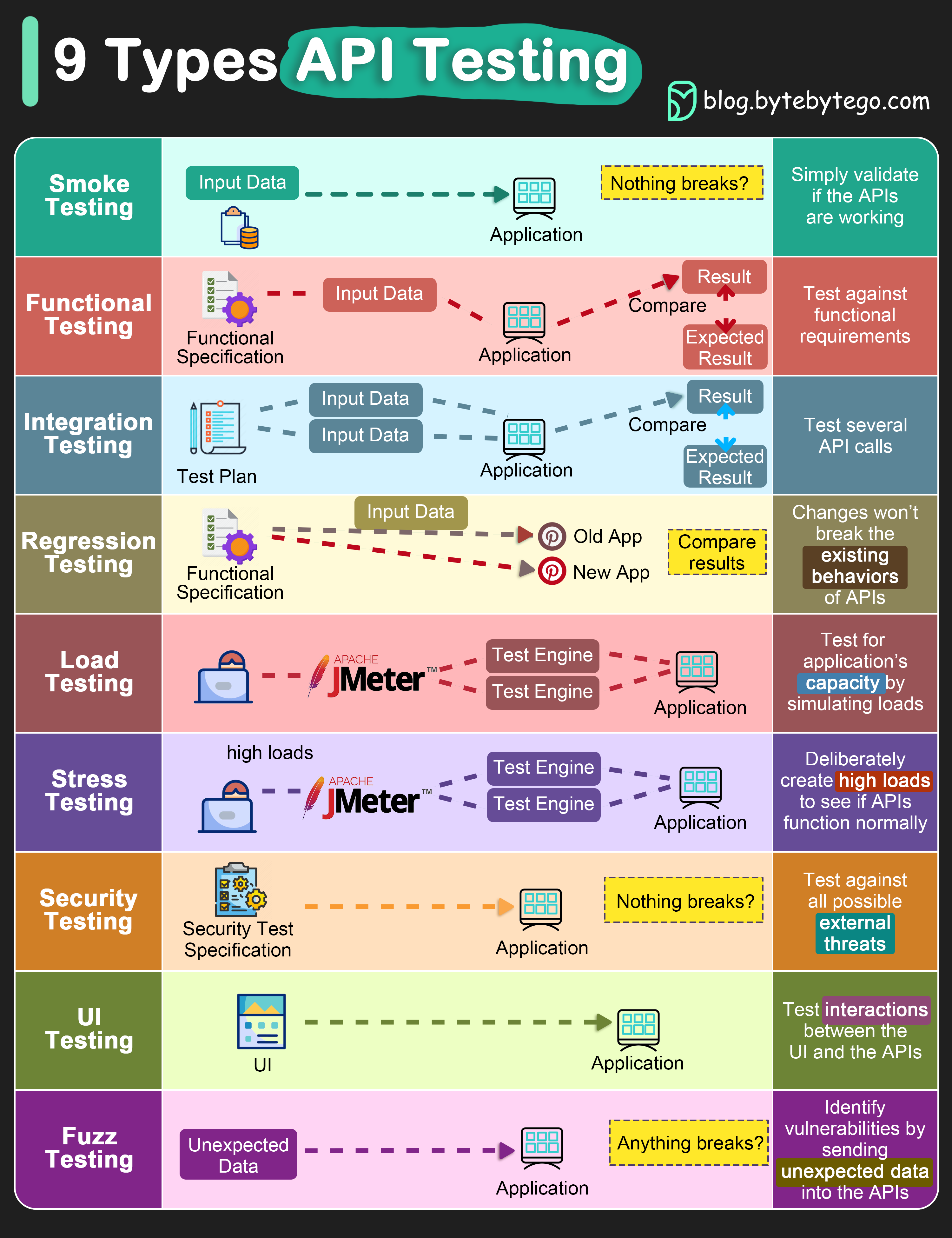
- Smoke Testing This is done after API development is complete. Simply validate if the APIs are working and nothing breaks.
- Functional Testing This creates a test plan based on the functional requirements and compares the results with the expected results.
- Integration Testing This test combines several API calls to perform end-to-end tests. The intra-service communications and data transmissions are tested.
- Regression Testing This test ensures that bug fixes or new features shouldn’t break the existing behaviors of APIs.
- Load Testing This tests applications’ performance by simulating different loads. Then we can calculate the capacity of the application.
- Stress Testing We deliberately create high loads to the APIs and test if the APIs are able to function normally.
- Security Testing This tests the APIs against all possible external threats.
- UI Testing This tests the UI interactions with the APIs to make sure the data can be displayed properly.
- Fuzz Testing This injects invalid or unexpected input data into the API and tries to crash the API. In this way, it identifies the API vulnerabilities.