mirror of
https://github.com/ByteByteGoHq/system-design-101.git
synced 2026-04-05 09:47:24 -04:00
 ee4b7305a2
This PR adds all the guides from [Visual
Guides](https://bytebytego.com/guides/) section on bytebytego to the
repository with proper links.

- [x] Markdown files for guides and categories are placed inside
`data/guides` and `data/categories`
- [x] Guide links in readme are auto-generated using
`scripts/readme.ts`. Everytime you run the script `npm run
update-readme`, it reads the categories and guides from the above
mentioned folders, generate production links for guides and categories
and populate the table of content in the readme. This ensures that any
future guides and categories will automatically get added to the readme.
- [x] Sorting inside the readme matches the actual category and guides
sorting on production
1.1 KiB
1.1 KiB
title, description, image, createdAt, draft, categories, tags
| title | description | image | createdAt | draft | categories | tags | |||
|---|---|---|---|---|---|---|---|---|---|
| Evolution of Uber's API Layer | Learn about the evolution of Uber's API layer. | https://assets.bytebytego.com/diagrams/0397-uber-api-layer.png | 2024-03-14 | false |
|
|
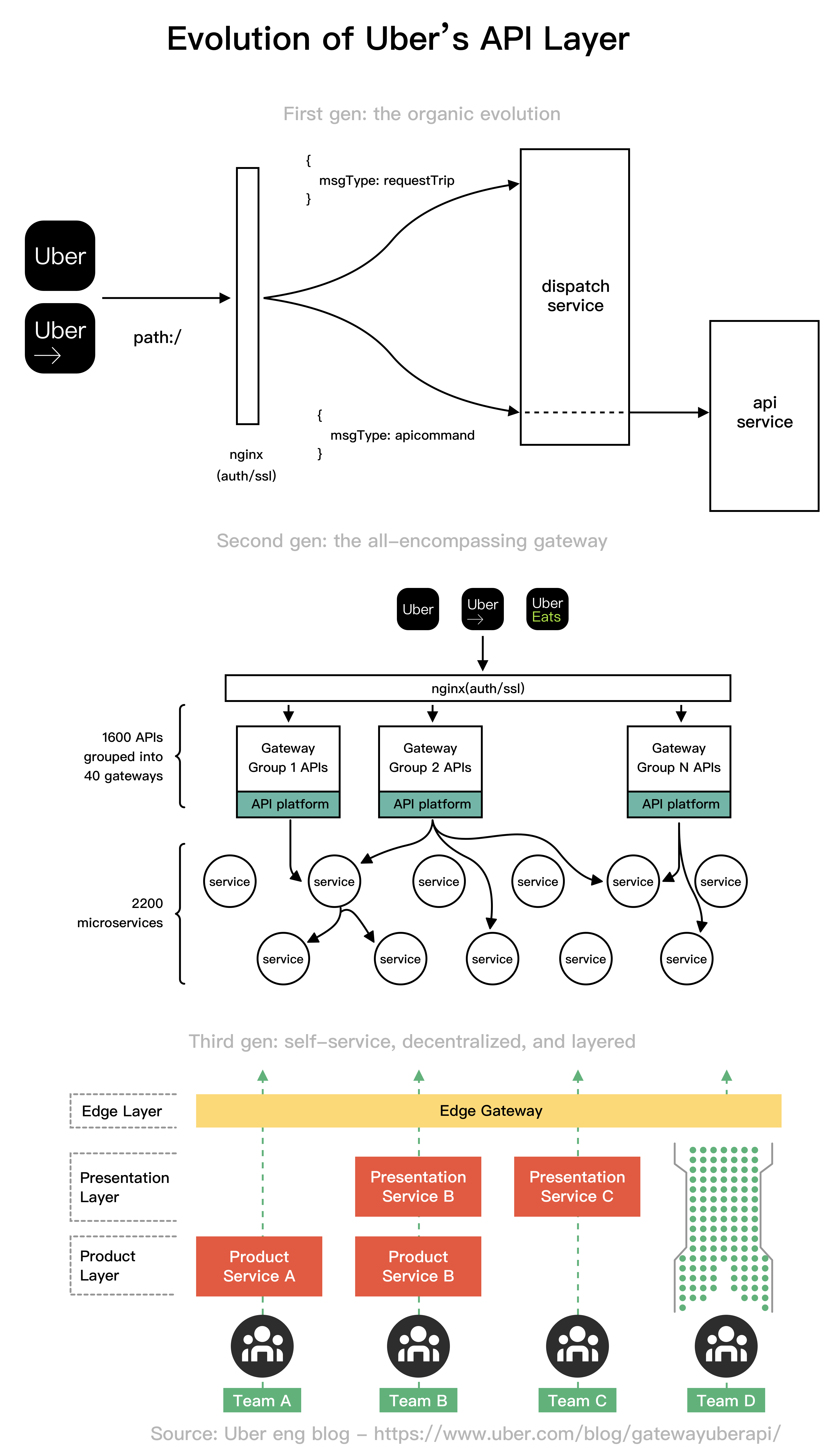
Uber’s API gateway went through 3 main stages.
First gen: the organic evolution. Uber's architecture in 2014 would have two key services: dispatch and API. A dispatch service connects a rider with a driver, while an API service stores the long-term data of users and trips.
Second gen: the all-encompassing gateway. Uber adopted a microservice architecture very early on. By 2019, Uber's products were powered by 2,200+ microservices as a result of this architectural decision.
Third gen: self-service, decentralized, and layered. As of early 2018, Uber had completely new business lines and numerous new applications. Freight, ATG, Elevate, groceries, and more are among the growing business lines. With a new set of goals comes the third generation.