mirror of
https://github.com/ByteByteGoHq/system-design-101.git
synced 2026-04-09 03:37:23 -04:00
 ee4b7305a2
This PR adds all the guides from [Visual
Guides](https://bytebytego.com/guides/) section on bytebytego to the
repository with proper links.

- [x] Markdown files for guides and categories are placed inside
`data/guides` and `data/categories`
- [x] Guide links in readme are auto-generated using
`scripts/readme.ts`. Everytime you run the script `npm run
update-readme`, it reads the categories and guides from the above
mentioned folders, generate production links for guides and categories
and populate the table of content in the readme. This ensures that any
future guides and categories will automatically get added to the readme.
- [x] Sorting inside the readme matches the actual category and guides
sorting on production
1.7 KiB
1.7 KiB
title, description, image, createdAt, draft, categories, tags
| title | description | image | createdAt | draft | categories | tags | |||
|---|---|---|---|---|---|---|---|---|---|
| Design Stock Exchange | Explore the design of a stock exchange and its key components. | https://assets.bytebytego.com/diagrams/0344-stock-exchange.png | 2024-03-11 | false |
|
|
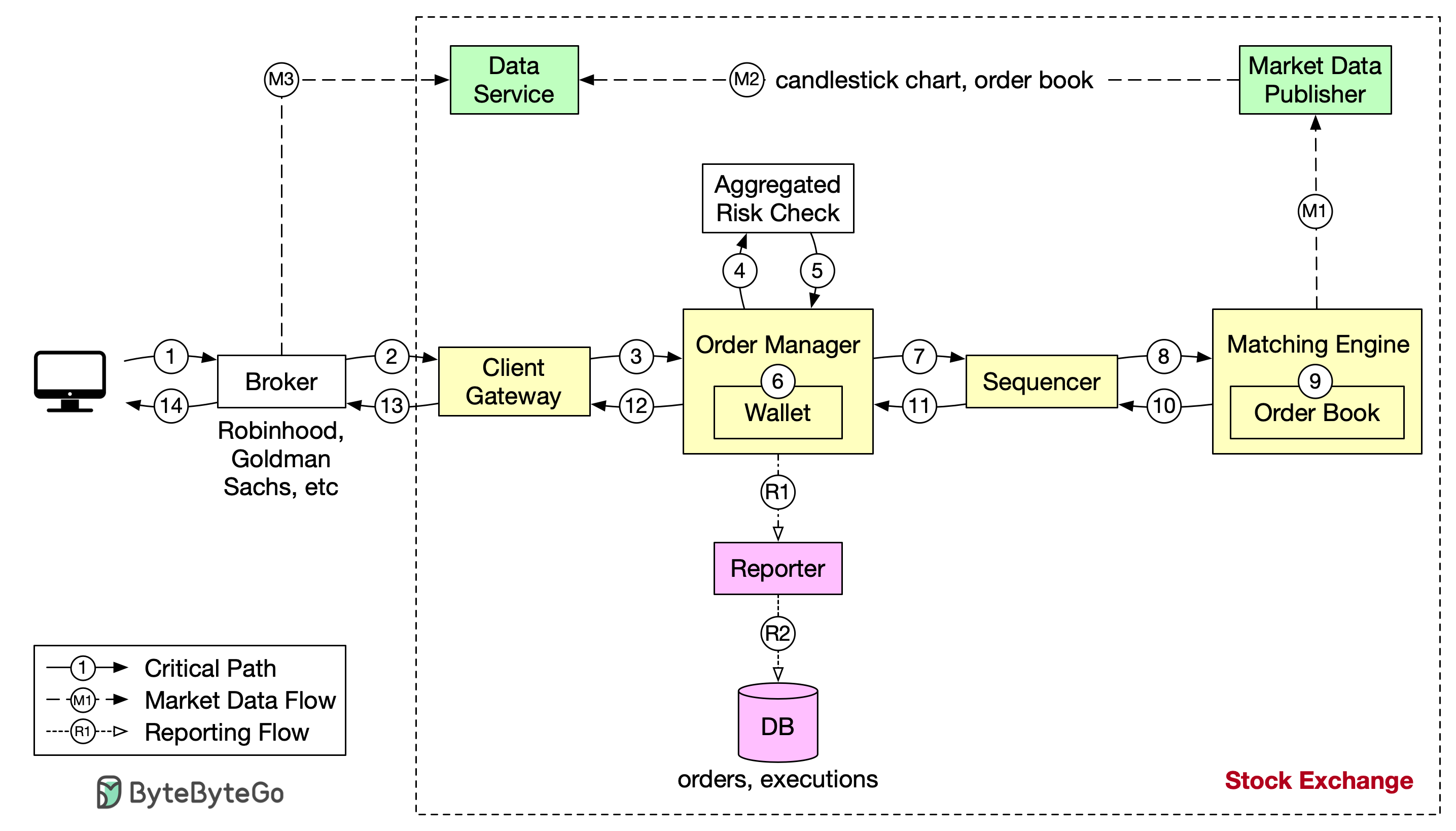
Let’s trace the life of an order through various components in the diagram to see how the pieces fit together.
First, we follow the order through the trading flow. This is the critical path with strict latency requirements. Everything has to happen fast in the flow:
Step 1: A client places an order via the broker’s web or mobile app.
Step 2: The broker sends the order to the exchange.
Step 3: The order enters the exchange through the client gateway. The client gateway performs basic gatekeeping functions such as input validation, rate limiting, authentication, normalization, etc. The client gateway then forwards the order to the order manager.
Step 4 - 5: The order manager performs risk checks based on rules set by the risk manager.
Step 6: After passing risk checks, the order manager verifies there are sufficient funds in the wallet for the order.
Step 7 - 9: The order is sent to the matching engine. When a match is found, the matching engine emits two executions, with one each for the buy and sell sides. To guarantee that matching results are deterministic when replayed, both orders and executions are sequenced.
Step 10 - 14: The executions are returned to the client.
Note that the trading flow (steps 1 to 14) is on the critical path, while the market data flow and reporting flow are not. They have different latency requirements.