 ee4b7305a2
This PR adds all the guides from [Visual
Guides](https://bytebytego.com/guides/) section on bytebytego to the
repository with proper links.

- [x] Markdown files for guides and categories are placed inside
`data/guides` and `data/categories`
- [x] Guide links in readme are auto-generated using
`scripts/readme.ts`. Everytime you run the script `npm run
update-readme`, it reads the categories and guides from the above
mentioned folders, generate production links for guides and categories
and populate the table of content in the readme. This ensures that any
future guides and categories will automatically get added to the readme.
- [x] Sorting inside the readme matches the actual category and guides
sorting on production
2.0 KiB
title, description, image, createdAt, draft, categories, tags
| title | description | image | createdAt | draft | categories | tags | |||
|---|---|---|---|---|---|---|---|---|---|
| Delivery Semantics | Understand at-most once, at-least once, and exactly once delivery semantics. | https://assets.bytebytego.com/diagrams/0165-delivery-semantics.png | 2024-02-10 | false |
|
|
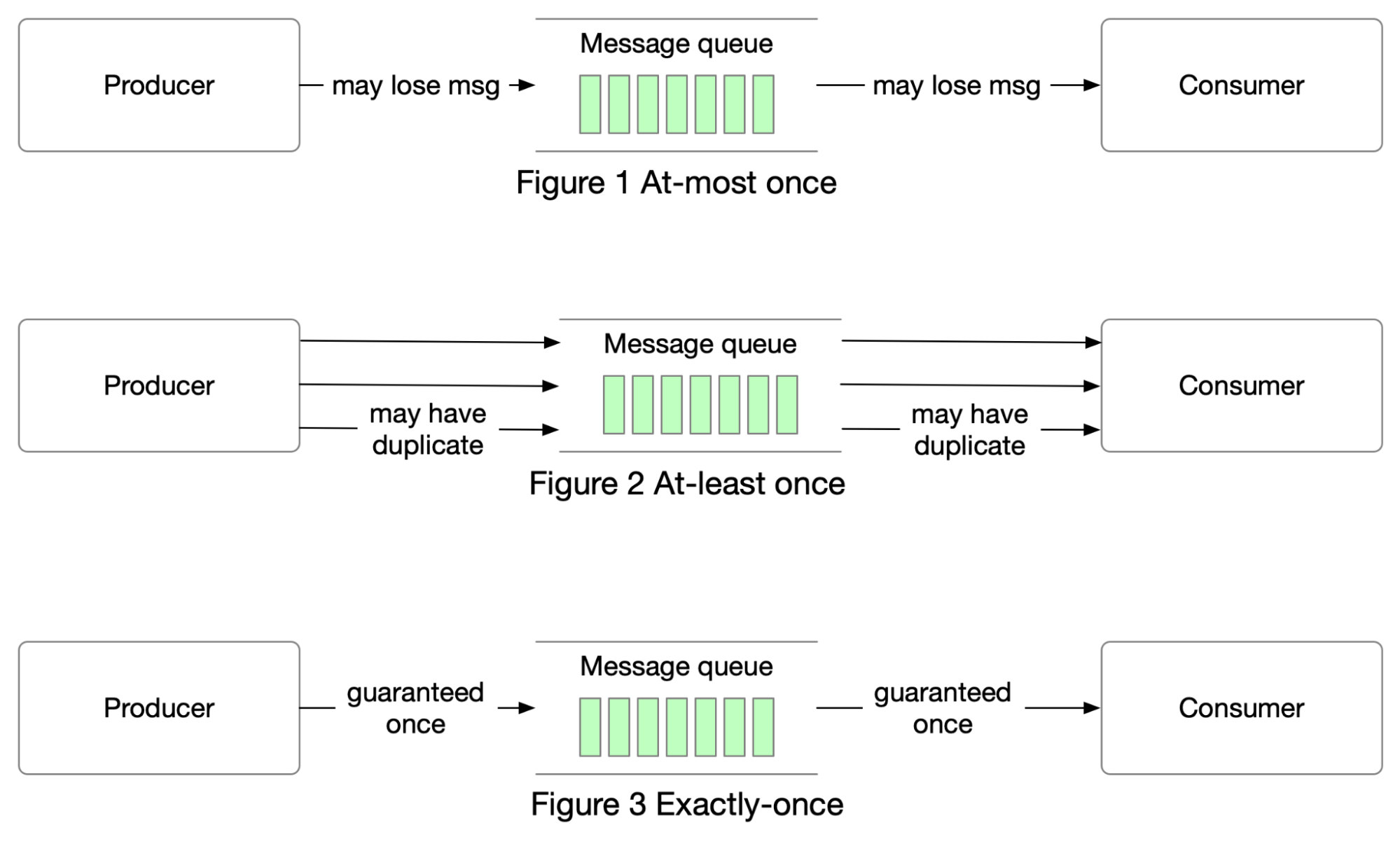
In modern architecture, systems are broken up into small and independent building blocks with well-defined interfaces between them. Message queues provide communication and coordination for those building blocks. Today, let’s discuss different delivery semantics: at-most once, at-least once, and exactly once.
At-most once
As the name suggests, at-most once means a message will be delivered not more than once. Messages may be lost but are not redelivered. This is how at-most once delivery works at the high level.
Use cases:
- It is suitable for use cases like monitoring metrics, where a small amount of data loss is acceptable.
At-least once
With this data delivery semantic, it’s acceptable to deliver a message more than once, but no message should be lost.
Use cases:
- With at-least once, messages won’t be lost but the same message might be delivered multiple times. While not ideal from a user perspective, at-least once delivery semantics are usually good enough for use cases where data duplication is not a big issue or deduplication is possible on the consumer side.
- For example, with a unique key in each message, a message can be rejected when writing duplicate data to the database.
Exactly once
Exactly once is the most difficult delivery semantic to implement. It is friendly to users, but it has a high cost for the system’s performance and complexity.
Use cases:
- Financial-related use cases (payment, trading, accounting, etc.). Exactly once is especially important when duplication is not acceptable and the downstream service or third party doesn’t support idempotency.